English
 Español
 tiếng việt
 русский
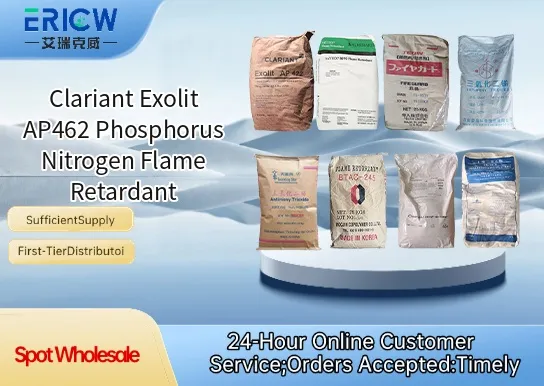
Intumescent phosphorus–nitrogen synergistic system delivering excellent flame retardancy in polyolefins without halogenated compounds.
Low loading level required for UL 94 V-0 rating in PP and PE, supporting high polymer purity and mechanical property retention.
Good thermal stability up to 300 °C, enabling compatibility with standard polyolefin processing conditions.
Low smoke and low toxicity profile, meeting stringent fire safety requirements for indoor and transportation applications.
Free-flowing powder with excellent dispersibility, facilitating homogeneous distribution during compounding.
Flame-retarded polypropylene (PP) for automotive interior components.
Halogen-free flame-retarded polyethylene (PE) cables and wire jacketing.
Electrical enclosures and housings requiring UL 94 V-0 compliance.
Household appliances with thermoplastic casings demanding low-smoke performance.
Building & construction materials including ducts and conduit systems.
| Chemical Type | Phosphorus–nitrogen intumescent flame retardant |
| Product Form | Free-flowing white to off-white powder |
| Appearance | Fine, homogeneous granular powder |
| Primary Applications | Polypropylene (PP), polyethylene (PE), and ethylene-propylene copolymers |
| Key Features | Halogen-free, low smoke, RoHS-compliant, REACH registered |
| Benefits | Enables UL 94 V-0 at 20–25 wt% in PP; no corrosion to metals; good processability |
| Density (g/cm³) | ~1.4–1.5 (typical) |
| Moisture Content (wt%) | <0.5 (max) |
Q1: What types of polymers is Exolit AP462 most commonly used in?
A: Exolit AP462 is primarily designed for use in engineering thermoplastics such as polyamide (PA6 and PA66), polybutylene terephthalate (PBT), and polycarbonate blends, where halogen-free flame retardancy with good thermal stability and low smoke generation is required.
Q2: How does Exolit AP462 achieve flame retardancy without halogens?
A: It operates via an intumescent mechanism—upon heating, the phosphorus component promotes char formation while the nitrogen component releases non-flammable gases, expanding the char layer to insulate the underlying polymer and suppress flame propagation.
Q3: Is Exolit AP462 suitable for applications requiring electrical insulation properties?
A: Yes—its low ionic impurity content and stable decomposition behavior help maintain high comparative tracking index (CTI) values and dielectric strength in flame-retarded compounds, making it well-suited for electronic housings and connectors.
Q4: Does Exolit AP462 affect the mechanical performance of the base polymer?
A: When properly compounded and dispersed, Exolit AP462 typically delivers balanced performance—retaining good tensile strength and impact resistance in optimized formulations, though elongation at break may be moderately reduced depending on loading and matrix compatibility.
Q5: What processing conditions are recommended for optimal dispersion and stability?
A: Exolit AP462 is compatible with standard melt compounding processes such as twin-screw extrusion. To preserve its thermal integrity, processing temperatures should generally remain below 280 °C, and residence time in the melt phase should be minimized where possible.
Contact With Us:
E-mail: wangxingqiang@ericwchem.com
Have a Questions? Call Us:
Add:
Building A1, Jiete Industrial Park, Huangpu District, Guangzhou City, Guangdong Province, China