English
 Español
 tiếng việt
 русский
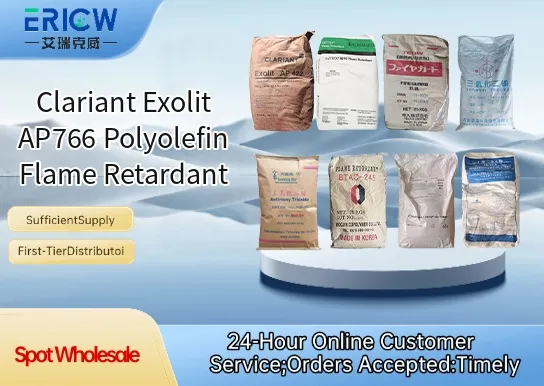
Halogen-free, phosphorus-based intumescent flame retardant specifically engineered for polyolefin compounds.
Enables excellent UL 94 V-0 rating at low loading levels (typically 20–25 wt%) in PP and PE matrices.
Offers good thermal stability up to 280 °C, supporting standard polyolefin processing conditions including injection molding and extrusion.
Delivers low smoke density and reduced toxic gas emission during combustion, meeting stringent fire safety requirements.
Provides good mechanical property retention—especially impact strength and tensile performance—in flame-retarded polyolefin formulations.
Electrical and electronic housings requiring UL 94 V-0 compliance.
Automotive interior components including dashboards, trim parts, and cable conduits.
Wire and cable jacketing for low-smoke, halogen-free applications.
Household appliance parts exposed to potential ignition sources.
Industrial packaging and transport containers where fire resistance is mandated.
| Chemical Type | Phosphorus-nitrogen based intumescent system |
| Product Form | Free-flowing white granules |
| Appearance | White to off-white granular solid |
| Density (23 °C) | 1.35–1.45 g/cm³ |
| Melting Range | 250–280 °C (onset of decomposition) |
| Moisture Content (max.) | 0.3 wt% |
| Primary Applications | Polypropylene (PP), polyethylene (PE), and thermoplastic elastomer (TPE) compounds |
| Key Benefits | Halogen-free, RoHS-compliant, REACH registered, low corrosion potential |
Q1: What is the primary application domain for Exolit AP766?
A: Exolit AP766 is specifically engineered for flame retardancy in polyolefin-based compounds, including PP and PE, particularly where halogen-free performance, low smoke generation, and good processability are required — such as in automotive interior parts, wire & cable insulation, and technical injection-molded components.
Q2: How does Exolit AP766 achieve flame retardancy without halogens?
A: It functions via an intumescent mechanism, forming a protective char layer upon exposure to heat or flame. This barrier insulates the underlying polymer, reduces heat feedback, and limits fuel release — delivering effective UL 94 V-0 or V-2 performance in appropriately formulated systems without releasing corrosive or toxic halogenated gases.
Q3: Is Exolit AP766 compatible with common polyolefin additives and stabilizers?
A: Yes — it demonstrates good compatibility with typical polyolefin processing aids, antioxidants, and acid scavengers. However, formulation optimization is recommended when used alongside highly acidic additives or certain nucleating agents, as interactions may affect dispersion or thermal stability during compounding.
Q4: What is the typical dosage range for achieving target flame retardancy?
A: Dosage depends on the base polymer, part thickness, and required fire performance level. In most standard PP/PE formulations, effective loading generally ranges from 0.1% to 2% by weight — with lower levels often sufficient for thin-walled applications and higher loadings needed for thicker sections or stringent flame tests.
Q5: Does Exolit AP766 impact mechanical properties of the final compound?
A: When properly dispersed and formulated, it typically maintains good balance between flame retardancy and mechanical integrity — retaining tensile strength and impact resistance better than many conventional mineral fillers. Minor reductions in elongation at break may occur at higher loadings, but these are usually manageable through polymer selection and additive synergy.
Contact With Us:
E-mail: wangxingqiang@ericwchem.com
Have a Questions? Call Us:
Add:
Building A1, Jiete Industrial Park, Huangpu District, Guangzhou City, Guangdong Province, China