English
 Español
 tiếng việt
 русский
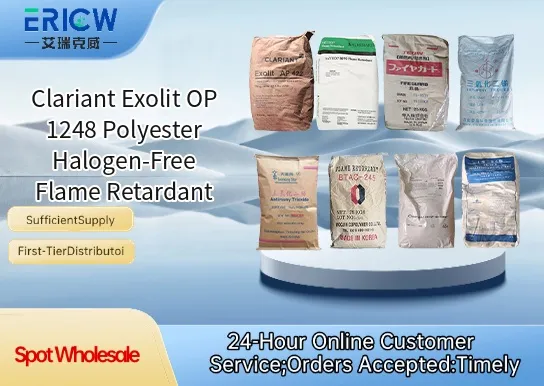
Highly effective phosphorus-based flame retardant specifically engineered for unsaturated polyester (UP) resins.
Halogen-free formulation meets stringent environmental and regulatory requirements, including RoHS and REACH compliance.
Excellent compatibility with standard UP resin systems, enabling homogeneous dispersion without compromising mechanical properties.
Enables UL 94 V-0 rating at low to medium loadings (typically 12–18 wt%) in cast and molded polyester components.
Low volatility and thermal stability up to 220 °C supports conventional processing methods such as casting, centrifugal casting, and compression molding.
Electrical enclosures and housings for industrial control and power distribution equipment.
Railway interior components including wall panels, ceiling tiles, and ducting systems.
Marine applications requiring fire-safe composite parts compliant with FTP Code and EN 45545-2 standards.
Lighting fixtures and reflectors where low smoke and halogen-free performance are critical.
Building and construction elements such as grilles, ducts, and decorative panels meeting Euroclass B-s1,d0 classification.
| Chemical Type | Organophosphorus compound (phosphinate-based) |
| Product Form | Free-flowing white granules |
| Appearance | White to off-white granular solid |
| Density (23 °C) | 1.55–1.65 g/cm³ |
| Decomposition Onset Temperature | ≥220 °C (TGA, 10 K/min, N₂) |
| Moisture Content | ≤0.3 wt% |
| Primary Applications | Unsaturated polyester (UP) resins for casting, molding, and pultrusion |
| Key Benefits | Halogen-free, low smoke, good electrical insulation, UL 94 V-0 achievable |
Q1: What is the primary application field for Exolit OP 1248?
A: Exolit OP 1248 is specifically engineered for flame retardancy in polyester-based thermoplastics, especially polyethylene terephthalate (PET) and polybutylene terephthalate (PBT), commonly used in electrical and electronic components, automotive interior parts, and thin-walled technical injection-molded articles.
Q2: How does Exolit OP 1248 achieve flame retardancy without halogens?
A: It functions primarily through an intumescent mechanism in the condensed phase—promoting char formation and reducing heat release—combined with gas-phase radical quenching by phosphorus-containing decomposition products. This synergistic action delivers effective UL 94 V-0 performance while remaining fully halogen-free and compliant with RoHS and REACH requirements.
Q3: Is Exolit OP 1248 compatible with common PET/PBT processing conditions?
A: Yes—it exhibits excellent thermal stability up to typical polyester processing temperatures (e.g., 260–280 °C) and good dispersion behavior during melt compounding and injection molding. Its low volatility and minimal plate-out tendency support stable, high-throughput production runs.
Q4: Does Exolit OP 1248 impact mechanical or optical properties of the final polymer?
A: When properly formulated, it maintains good retention of tensile strength and impact resistance in reinforced and unreinforced polyesters. Its low intrinsic color and high purity contribute to excellent clarity and minimal yellowing—making it suitable for light-colored and transparent applications where aesthetics matter.
Contact With Us:
E-mail: wangxingqiang@ericwchem.com
Have a Questions? Call Us:
Add:
Building A1, Jiete Industrial Park, Huangpu District, Guangzhou City, Guangdong Province, China