English
 Español
 tiếng việt
 русский
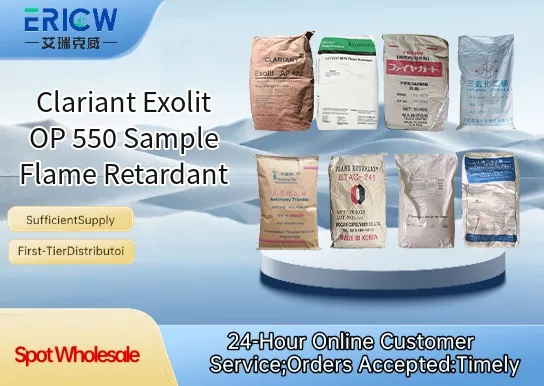
Halogen-free phosphorus-based flame retardant offering excellent fire safety performance.
Designed for efficient dispersion in polyolefin compounds, including PP and PE.
Low smoke and low toxicity profile during combustion, supporting improved fire safety compliance.
Thermally stable up to 300 °C, enabling compatibility with standard polymer processing conditions.
Non-migrating formulation ensures long-term flame retardancy retention and surface integrity.
Wire and cable insulation for low-smoke zero-halogen (LSZH) applications.
Automotive interior components requiring UL 94 V-0 or V-2 rating.
Household appliance housings and enclosures made from polypropylene.
Electrical junction boxes and connector parts in industrial equipment.
Building & construction profiles where flame retardancy meets EN 13501-1 classification requirements.
| Chemical Type | Organophosphorus compound |
| Product Form | Powder |
| Appearance | White to off-white free-flowing powder |
| Density (23 °C) | ~1.4 g/cm³ |
| Decomposition Onset Temperature | ≥280 °C (TGA, 10 K/min, air) |
| Moisture Content | <0.5 wt% (by Karl Fischer titration) |
| Solubility | Insoluble in water and common hydrocarbons |
| Primary Applications | Polyolefins (PP, HDPE, LDPE), thermoplastic elastomers |
Q1: What is the primary chemical nature of Exolit OP 550?
A: Exolit OP 550 is an organophosphorus-based flame retardant, specifically formulated as a reactive or additive phosphinate compound designed for high thermal stability and efficient gas-phase flame inhibition in polymer systems.
Q2: In which polymer matrices is Exolit OP 550 typically used?
A: It is commonly applied in engineering thermoplastics such as polyamide 6 and 66, polybutylene terephthalate (PBT), and polycarbonate blends—especially where halogen-free, UL94 V-0 rated performance is required at thin wall sections.
Q3: How does Exolit OP 550 contribute to flame retardancy without compromising mechanical properties?
A: Its molecular design enables strong compatibility with polar engineering plastics, supporting good dispersion and minimal impact on tensile strength or impact resistance—particularly when optimized within recommended processing conditions and loading ranges.
Q4: Is Exolit OP 550 suitable for applications requiring regulatory compliance for electronics or automotive interiors?
A: Yes—it is widely selected for electronic housings and automotive interior components due to its halogen-free profile, low smoke generation, and ability to meet stringent flammability requirements such as UL94 and glow-wire test standards across multiple end-use specifications.
Q5: What are key handling and processing considerations for Exolit OP 550?
A: It exhibits good thermal stability up to typical melt processing temperatures of engineering plastics; however, drying prior to processing is recommended to prevent hydrolytic degradation, and optimal dispersion should be achieved via standard compounding techniques such as twin-screw extrusion.
Contact With Us:
E-mail: wangxingqiang@ericwchem.com
Have a Questions? Call Us:
Add:
Building A1, Jiete Industrial Park, Huangpu District, Guangzhou City, Guangdong Province, China