English
 Español
 tiếng việt
 русский
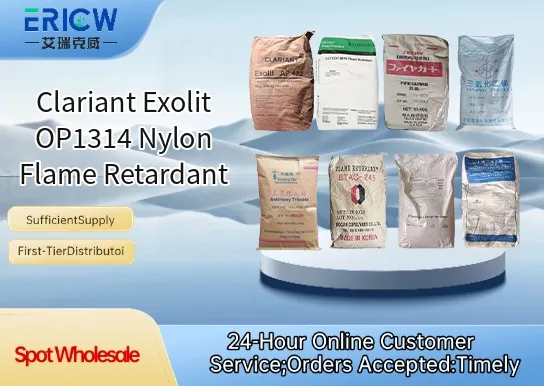
Halogen-free, phosphorus-based flame retardant specifically engineered for polyamide 6 and polyamide 66.
Enables excellent flame retardancy achieving UL94 V-0 rating at low loading levels (typically 10–15 wt%).
Good thermal stability compatible with standard nylon processing temperatures up to 280 °C.
Maintains high mechanical performance—minimal impact on tensile strength and impact resistance of the base polymer.
Low volatility and low migration tendency, supporting long-term part reliability and compliance with RoHS and REACH.
Electrical and electronic connectors requiring stringent flammability compliance (e.g., IEC 60695-2-11, UL94).
Automotive under-hood components including sensor housings, fuse boxes, and motor control units.
Consumer appliance parts such as power tool housings, coffee maker components, and charging interfaces.
Industrial automation housings and terminal blocks exposed to elevated ambient temperatures.
3C electronics enclosures where halogen-free materials are mandated by OEM specifications.
| Chemical Type | Organophosphorus compound (phosphinate-based) |
| Product Form | Free-flowing white granules |
| Appearance | White to off-white granular solid |
| Primary Applications | Flame retardant for PA6 and PA66 engineering plastics |
| Key Features | Halogen-free, UL94 V-0 compliant, low-migration, high thermal stability |
| Benefits | Retains mechanical properties, processable on standard compounding and injection molding equipment |
| Regulatory Compliance | RoHS 2011/65/EU, REACH SVHC candidate list screened |
| Density (23 °C) | ~1.4 g/cm³ |
Q1: What is the primary mechanism of flame retardancy for Exolit OP1314 in nylon applications?
A: Exolit OP1314 functions primarily through an intumescent mechanism in nylon matrices, promoting char formation and expanding to create a protective barrier that insulates the underlying polymer and limits heat and mass transfer during combustion.
Q2: Is Exolit OP1314 compatible with common nylon grades such as PA6 and PA66?
A: Yes, Exolit OP1314 is specifically engineered for use in polyamide 6 and polyamide 66 systems. It demonstrates good dispersion stability and minimal impact on mechanical properties when properly compounded and processed under standard conditions.
Q3: How does processing temperature affect the performance and stability of Exolit OP1314 in nylon?
A: Exolit OP1314 is formulated to withstand typical nylon melt processing temperatures (up to approximately 290 °C), maintaining thermal stability during extrusion and injection molding without significant decomposition or adverse interactions with the polymer matrix.
Q4: Does Exolit OP1314 require additional synergists or co-additives to achieve V-0 rating in UL 94 tests?
A: While Exolit OP1314 can deliver effective flame retardancy as a standalone additive in many nylon formulations, optimal UL 94 V-0 performance often benefits from careful formulation balancing—including polymer grade selection, filler content, and optional stabilizers—rather than mandatory synergists.
Contact With Us:
E-mail: wangxingqiang@ericwchem.com
Have a Questions? Call Us:
Add:
Building A1, Jiete Industrial Park, Huangpu District, Guangzhou City, Guangdong Province, China