English
 Español
 tiếng việt
 русский
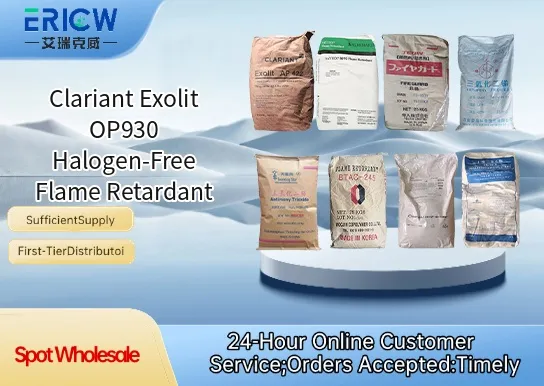
Phosphorus-based intumescent flame retardant offering excellent fire performance without halogens or heavy metals.
Designed for high thermal stability, enabling processing at temperatures up to 300 °C in engineering thermoplastics.
Low smoke and low toxicity emissions during combustion, meeting stringent fire safety standards (e.g., UL 94 V-0, EN 45545-2).
Good compatibility with polyamide 6 and polyamide 66, supporting homogeneous dispersion and minimal impact on mechanical properties.
Non-migrating formulation ensures long-term flame-retardant efficacy and surface stability in finished parts.
Electrical and electronic housings requiring UL 94 V-0 rating at 1.5 mm thickness.
Automotive interior components including connectors, fuse boxes, and under-hood parts compliant with FMVSS 302 and OEM specifications.
Railway applications such as seat frames and control panels meeting EN 45545-2 R22/R23 requirements.
Industrial automation enclosures and sensor housings demanding halogen-free, RoHS-compliant materials.
| Chemical Type | Phosphorus-nitrogen intumescent system |
| Product Form | Free-flowing white granules |
| Appearance | White to off-white granules |
| Density | ~1.4 g/cm³ (at 23 °C) |
| Melting Range | 280–320 °C (DSC, onset) |
| Moisture Content | ≤0.2 wt% (by Karl Fischer titration) |
| Primary Applications | Polyamide 6 and 66 compounds for electrical, automotive, and rail sectors |
| Key Features | Halogen-free, non-toxic, RoHS and REACH compliant |
Q1: What is the primary chemical composition of Exolit OP930?
A: Exolit OP930 is an organophosphorus-based flame retardant, specifically formulated as a highly efficient, halogen-free additive for thermoplastic polymers. Its molecular structure is optimized for excellent thermal stability and compatibility with engineering plastics such as polyamides and polyesters.
Q2: Which polymer systems is Exolit OP930 most commonly used in?
A: It is widely applied in polyamide 6 and polyamide 66, especially in thin-walled electronic components requiring UL 94 V-0 rating. It also demonstrates good performance in polyesters (e.g., PBT) and certain polyolefin blends where halogen-free solutions are mandated by end-use specifications.
Q3: How does Exolit OP930 achieve flame retardancy without halogens?
A: It functions primarily through condensed-phase action—promoting char formation on the polymer surface during combustion—which insulates the underlying material and reduces fuel supply to the flame. Its phosphorus content contributes to both char enhancement and gas-phase radical quenching under thermal stress.
Q4: Is Exolit OP930 suitable for applications requiring electrical insulation properties?
A: Yes—Exolit OP930 is designed to maintain good dielectric strength and low ionic impurity levels, making it appropriate for flame-retarded engineering plastics used in connectors, housings, and other electrical/electronic components where tracking resistance and long-term insulation integrity are critical.
Q5: What processing advantages does Exolit OP930 offer during compounding and injection molding?
A: It exhibits excellent thermal stability up to typical melt processing temperatures of polyamides and polyesters, minimal volatility, and good dispersion characteristics. This supports stable extrusion, low plate-out, and consistent mechanical performance retention in finished parts.
Contact With Us:
E-mail: wangxingqiang@ericwchem.com
Have a Questions? Call Us:
Add:
Building A1, Jiete Industrial Park, Huangpu District, Guangzhou City, Guangdong Province, China