English
 Español
 tiếng việt
 русский
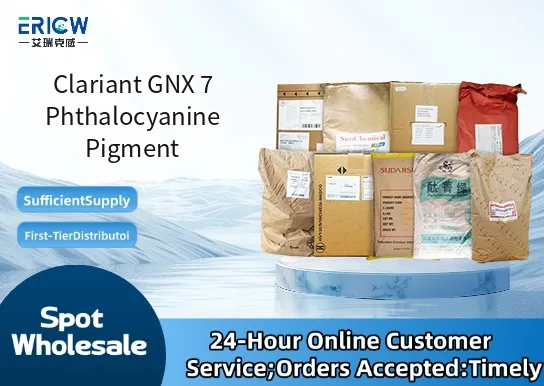
Exceptional lightfastness and weather resistance for long-term outdoor performance.
High tinctorial strength with excellent color development in demanding polymer systems.
Outstanding thermal stability suitable for high-temperature processing (e.g., polyolefin compounding).
Good dispersibility in both polar and non-polar media, enabling efficient pigment incorporation.
Compliant with major global regulatory frameworks including EU REACH and US FDA indirect food contact requirements (as applicable to pigments in plastics).
Polyolefin masterbatches for automotive interior and exterior components.
Engineering plastics including polyamide and polycarbonate for durable consumer goods.
High-performance industrial coatings requiring UV resistance and color consistency.
Food-contact-grade plastic packaging where regulatory compliance and low extractables are critical.
Electrical insulation materials requiring stable blue-green hue and dielectric integrity.
| Chemical Type | Copper phthalocyanine derivative (chlorinated) |
| Product Form | Free-flowing powder |
| Appearance | Intense greenish-blue crystalline powder |
| Primary Applications | Polyolefins, engineering thermoplastics, industrial coatings |
| Key Features | High heat stability, excellent lightfastness, low volatility |
| Benefits | Consistent color batch-to-batch, minimal plate-out in extrusion, low migration |
| Regulatory Status | REACH registered; compliant with FDA 21 CFR §178.3297 (for polymers) |
| Particle Size (D50) | Approx. 0.08–0.12 µm (by laser diffraction) |
Q1: What is the primary chemical class and typical hue profile of GNX 7?
A: GNX 7 is a copper phthalocyanine-based pigment, delivering a bright, clean blue shade with strong greenish undertones—characteristic of high-performance α-phase phthalocyanine pigments.
Q2: Is GNX 7 suitable for use in food-contact plastics?
A: GNX 7 is designed for industrial applications and is not pre-approved for direct food-contact use. Regulatory compliance must be verified case-by-case based on final formulation, processing conditions, and applicable regional requirements.
Q3: How does GNX 7 perform in terms of thermal stability during polymer processing?
A: GNX 7 exhibits excellent thermal stability, maintaining color integrity under standard polyolefin and engineering plastic processing conditions—including extrusion and injection molding at temperatures up to approximately 280 °C.
Q4: What dispersion methods are recommended for optimal performance in masterbatches?
A: For consistent color development and minimal agglomeration, high-shear compounding—such as twin-screw extrusion—is strongly recommended. Pre-wetting or use of compatible dispersing aids may further enhance pigment distribution in non-polar polymer systems.
Q5: Can GNX 7 be used alongside other organic pigments in multi-pigment systems?
A: Yes—GNX 7 demonstrates good compatibility with many common organic pigments and shows no significant adverse interactions under typical compounding conditions. However, compatibility testing in the final application matrix is advised to confirm color stability and absence of flocculation.
Contact With Us:
E-mail: wangxingqiang@ericwchem.com
Have a Questions? Call Us:
Add:
Building A1, Jiete Industrial Park, Huangpu District, Guangzhou City, Guangdong Province, China