English
 Español
 tiếng việt
 русский
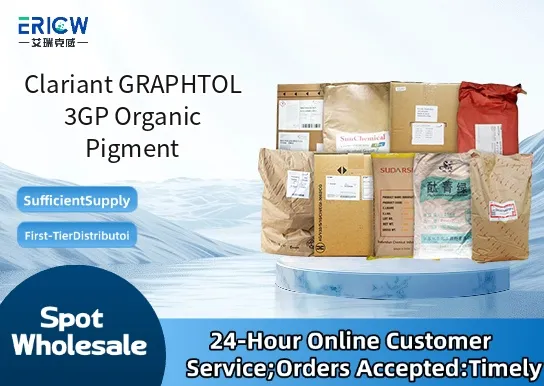
High chroma and excellent color strength for vibrant, consistent shades.
Outstanding thermal stability suitable for high-temperature processing up to 280 °C.
Good lightfastness and weather resistance in demanding outdoor applications.
Excellent dispersibility in both polar and non-polar polymer matrices.
Low volatility and minimal plate-out tendency during extrusion and injection molding.
Polyolefin masterbatches (PP, PE) for automotive interior trim and packaging films.
Engineering plastics including polyamide (PA6/PA66) and polycarbonate (PC).
Thermoplastic elastomers (TPE) used in consumer goods and medical device housings.
Flame-retardant compounds where pigment compatibility with brominated/phosphorus-based FR systems is critical.
| Chemical Type | Quinacridone derivative (high-performance organic pigment) |
| Product Form | Free-flowing powder |
| Appearance | Violet-red fine powder |
| Primary Applications | Plastics coloring (especially engineering thermoplastics and polyolefins) |
| Key Features | Thermal stability, dispersion efficiency, low migration |
| Benefits | Color consistency across processing cycles, reduced filter clogging, compliance with REACH and RoHS |
| Regulatory Status | Compliant with EU Directive 2002/72/EC for food-contact plastics (subject to specific migration limits) |
Q1: What is the primary application field for GRAPHTOL 3GP?
A: GRAPHTOL 3GP is specifically developed for high-performance gravure and flexographic inks used in packaging applications, particularly where excellent gloss, transparency, and print definition are required on films and coated papers.
Q2: Is GRAPHTOL 3GP suitable for food-contact packaging inks?
A: Yes — GRAPHTOL 3GP is designed to meet stringent regulatory expectations for indirect food contact applications when formulated into compliant ink systems and processed under appropriate conditions. Final compliance depends on the full ink formulation, substrate, and processing parameters.
Q3: How does GRAPHTOL 3GP compare to conventional phthalocyanine pigments in terms of dispersion stability?
A: GRAPHTOL 3GP features optimized surface treatment for enhanced wetting and stabilization in low-viscosity, solvent-based gravure ink vehicles, offering improved dispersion robustness and reduced risk of flocculation during storage and printing compared to standard copper phthalocyanine grades.
Q4: What solvents or resin systems show best compatibility with GRAPHTOL 3GP?
A: GRAPHTOL 3GP demonstrates good compatibility with common nitrocellulose, polyamide, acrylic, and chlorinated polyolefin resins, and performs well in ester-, ketone-, and aromatic hydrocarbon-based solvent blends typically used in gravure packaging inks.
Q5: What is the typical dosage range for GRAPHTOL 3GP in finished ink formulations?
A: Dosage depends on the desired color strength and opacity requirements, but GRAPHTOL 3GP is generally used at low concentrations — typically ranging from 0.1% to 2% by weight in the final ink — due to its high tinctorial strength and efficient dispersion characteristics.
Contact With Us:
E-mail: wangxingqiang@ericwchem.com
Have a Questions? Call Us:
Add:
Building A1, Jiete Industrial Park, Huangpu District, Guangzhou City, Guangdong Province, China