English
 Español
 tiếng việt
 русский
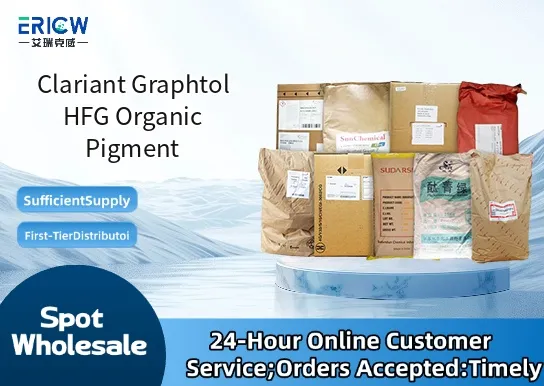
High chroma and excellent color strength for vibrant, consistent shades.
Outstanding thermal stability suitable for high-temperature processing up to 280 °C.
Good lightfastness and weather resistance in demanding outdoor applications.
Low volatility and minimal extractables—ideal for food-contact-compliant masterbatches (subject to regulatory approval).
Excellent dispersibility in polyolefins, PS, ABS, and engineering thermoplastics.
Coloration of polypropylene (PP) and polyethylene (PE) fibers and films.
Automotive interior plastics requiring long-term UV and heat resistance.
Packaging materials including rigid containers and flexible laminates.
Household appliances and consumer electronics housings.
Engineering plastic components for industrial and medical devices.
| Chemical Type | High-performance perylene derivative |
| Product Form | Free-flowing powder |
| Appearance | Dark red to maroon fine powder |
| Primary Applications | Polyolefins, styrenics, engineering plastics |
| Key Features | Thermal stability, low migration, high tinctorial strength |
| Benefits | Consistent color batch-to-batch, reduced pigment loading, improved processability |
| Regulatory Compliance | EU REACH registered; compliant with FDA 21 CFR §178.3297 (for specific formulations) |
| Recommended Carrier | HDPE or PP wax-based carrier for masterbatch use |
Q1: What are the primary application areas for Graphtol HFG?
A: Graphtol HFG is specifically engineered for high-performance organic pigment applications in engineering thermoplastics, including polyamide (PA), polybutylene terephthalate (PBT), and polyphenylene sulfide (PPS), where thermal stability, color strength, and dispersion consistency are critical.
Q2: How does Graphtol HFG perform under high-temperature processing conditions?
A: Graphtol HFG exhibits excellent thermal stability, enabling reliable pigment performance during melt processing of engineering plastics at temperatures commonly exceeding 280 °C, with minimal risk of decomposition or color shift.
Q3: Is Graphtol HFG suitable for food-contact-compliant plastic formulations?
A: Graphtol HFG is designed to meet stringent regulatory expectations for indirect food contact applications in plastics, subject to final formulation assessment and compliance verification by the compounder or end-user according to applicable regional requirements.
Q4: What is the typical dosage range for optimal coloration and dispersion in engineering thermoplastics?
A: Dosage is formulation-dependent, but Graphtol HFG is typically used at low concentrations—generally ranging from 0.1% to 2% by weight—to achieve strong, uniform coloration without compromising mechanical properties or processability.
Q5: How does Graphtol HFG compare to conventional organic pigments in terms of dispersion behavior?
A: Graphtol HFG features optimized particle size distribution and surface treatment, facilitating rapid and homogeneous dispersion in molten polymer matrices—reducing mixing time and minimizing the need for extended compounding steps.
Contact With Us:
E-mail: wangxingqiang@ericwchem.com
Have a Questions? Call Us:
Add:
Building A1, Jiete Industrial Park, Huangpu District, Guangzhou City, Guangdong Province, China