English
 Español
 tiếng việt
 русский
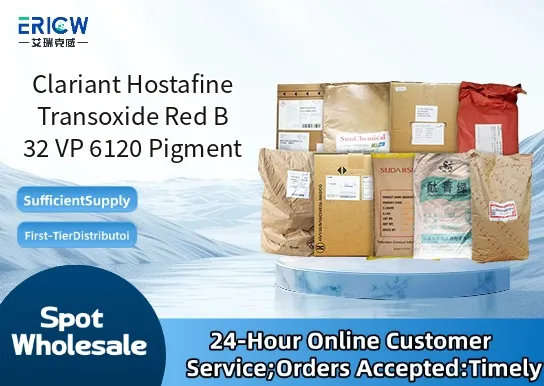
High chroma and clean, bluish-red shade ideal for demanding color matching.
Excellent thermal stability up to 280 °C, suitable for high-temperature polymer processing.
Outstanding lightfastness and weather resistance (ISO 105-B02, Grade 7–8).
Good dispersibility in polyolefins, PS, ABS, and engineering plastics without pre-treatment.
Low migration behavior, meeting stringent regulatory requirements for food-contact applications (EU 10/2011 compliant).
Polypropylene (PP) and polyethylene (PE) fibers and injection-molded parts.
Automotive interior components requiring long-term UV and heat stability.
Consumer electronics housings where consistent color and dimensional stability are critical.
Food packaging films and containers complying with global food-contact regulations.
Technical masterbatches for high-performance engineering thermoplastics.
| Chemical Type | Organic pigment (Diketopyrrolopyrrole derivative) |
| Product Form | Free-flowing granular concentrate |
| Appearance | Red granules, free of visible specks or agglomerates |
| Primary Applications | Polyolefins, styrenics, engineering plastics |
| Key Features | High tinctorial strength, excellent heat stability, low volatility |
| Benefits | Consistent batch-to-batch color, minimal plate-out, efficient dosing |
| Regulatory Compliance | EU Food Contact Regulation (EU) No 10/2011; FDA 21 CFR 178.3290 |
| Recommended Carrier | PP-based carrier system (customizable upon request) |
Q1: What is the primary chemical nature of Hostafine Transoxide Red B 32 VP 6120?
A: Hostafine Transoxide Red B 32 VP 6120 is a high-performance, organic pigment based on the diketopyrrolopyrrole (DPP) chemical class, offering excellent chromatic strength, thermal stability, and lightfastness.
Q2: Is this pigment suitable for use in food-contact plastics?
A: Hostafine Transoxide Red B 32 VP 6120 is not certified for direct food-contact applications under major global regulatory frameworks. It is intended for non-food-contact industrial plastics, coatings, and specialty inks where high color performance and durability are required.
Q3: How does this pigment perform in high-temperature processing environments?
A: Thanks to its DPP backbone and optimized particle engineering, this pigment exhibits good thermal stability and retains color integrity during standard thermoplastic processing—including injection molding and extrusion—at temperatures up to approximately 280 °C, depending on residence time and polymer matrix.
Q4: What dispersion methods are recommended for optimal performance in polymer systems?
A: For best results, pre-dispersion using high-shear mixing or twin-screw compounding is recommended. The pigment’s surface treatment supports efficient incorporation into polyolefins, styrenics, and engineering plastics—avoiding agglomeration and ensuring uniform color development.
Contact With Us:
E-mail: wangxingqiang@ericwchem.com
Have a Questions? Call Us:
Add:
Building A1, Jiete Industrial Park, Huangpu District, Guangzhou City, Guangdong Province, China