English
 Español
 tiếng việt
 русский
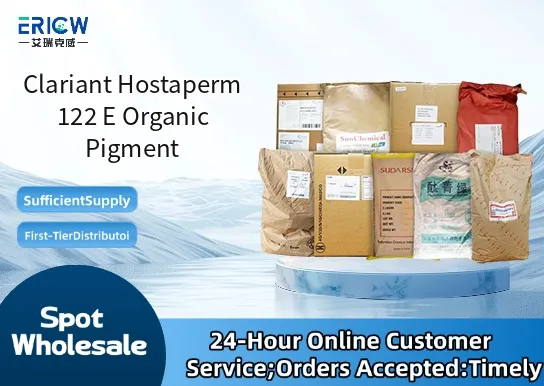
High thermal stability suitable for demanding processing conditions up to 280 °C.
Excellent lightfastness and weather resistance in polymer systems.
Good dispersibility in polyolefins, PVC, and engineering thermoplastics.
Low migration tendency ensuring color consistency in food-contact-compliant applications.
REACH-compliant and free of heavy metals and restricted aromatic amines.
Polypropylene (PP) and polyethylene (PE) packaging films.
Automotive interior components requiring long-term UV stability.
Household appliances with colored plastic housings.
Injection-molded technical parts for industrial equipment.
Blown and cast films for agricultural mulch and greenhouse covers.
| Chemical Type | Quinacridone derivative |
| Product Form | Free-flowing powder |
| Appearance | Reddish-violet fine powder |
| Primary Applications | Polyolefins, PVC, engineering plastics |
| Key Features | Thermal stability, lightfastness, low migration |
| Benefits | Color consistency, regulatory compliance, processing robustness |
| Regulatory Status | EU REACH registered; compliant with FDA 21 CFR §178.3297 (for polymers) |
| Recommended Loading Range | 0.1–0.5 wt% depending on substrate and opacity requirement |
Q1: What is the primary chemical class and typical application field for Hostaperm 122 E?
A: Hostaperm 122 E is a high-performance perylene red organic pigment, widely used in demanding applications such as automotive coatings, industrial finishes, and high-gloss plastics where excellent lightfastness, thermal stability, and color strength are required.
Q2: Is Hostaperm 122 E suitable for use in food-contact plastics or packaging inks?
A: Hostaperm 122 E is not certified for direct food-contact applications. It is intended for non-food-contact industrial uses; for food-contact systems, Clariant offers dedicated pigments compliant with relevant regional regulatory frameworks—consult technical service for appropriate alternatives.
Q3: How does Hostaperm 122 E perform under elevated processing temperatures, such as during polyolefin compounding?
A: This pigment exhibits good thermal stability and is generally suitable for processing temperatures up to approximately 280–300 °C, making it appropriate for many thermoplastic applications including PP and PE, though optimal dispersion and residence time should be controlled to preserve color integrity.
Q4: What are the recommended dispersion methods for achieving optimal color development in solvent-based coatings?
A: For solvent-based systems, high-shear dispersion using suitable media mills or bead mills is recommended. Pre-wetting with compatible solvents and careful control of milling time and temperature help achieve full pigment development and consistent rheology without overgrinding.
Contact With Us:
E-mail: wangxingqiang@ericwchem.com
Have a Questions? Call Us:
Add:
Building A1, Jiete Industrial Park, Huangpu District, Guangzhou City, Guangdong Province, China