English
 Español
 tiếng việt
 русский
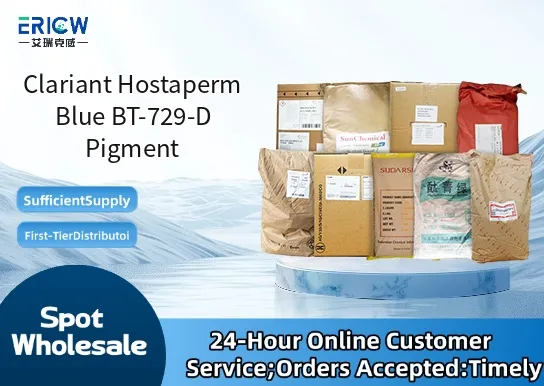
High chroma and excellent bluish-red shade for vibrant, clean blue coloration.
Outstanding thermal stability up to 280 °C, suitable for demanding polymer processing.
Good lightfastness and weather resistance in outdoor applications.
Excellent dispersibility in polyolefins, PVC, and engineering thermoplastics.
Low volatile organic compound (VOC) content, supporting sustainable manufacturing practices.
Polyolefin masterbatches for packaging and automotive interior components.
PVC profiles and rigid sheets used in construction and window systems.
Engineering plastics including ABS and polycarbonate for consumer electronics housings.
Wire and cable jacketing requiring long-term color retention and thermal robustness.
Industrial coatings where high tinctorial strength and batch-to-batch consistency are critical.
| Chemical Type | Quinacridone derivative |
| Product Form | Fine powder |
| Appearance | Deep blue-violet free-flowing powder |
| Primary Applications | Polyolefins, PVC, ABS, polycarbonate |
| Key Features | High thermal stability, excellent dispersion, strong tinting strength |
| Benefits | Consistent color match, low dust generation, good migration resistance |
| Regulatory Compliance | REACH registered; compliant with FDA 21 CFR §178.3297 for polymer additives |
| Recommended Processing Temperature Range | Up to 280 °C (short-term) |
Q1: What are the primary application areas for Hostaperm Blue BT-729-D?
A: Hostaperm Blue BT-729-D is a high-performance organic pigment designed primarily for demanding industrial applications including automotive coatings, coil coatings, and high-gloss architectural finishes. Its excellent heat stability and lightfastness also support use in certain engineering plastics and specialty inks where intense blue shade and durability are required.
Q2: How does BT-729-D compare to other Hostaperm Blue pigments in terms of dispersion behavior and color strength?
A: BT-729-D offers superior dispersibility in polar resin systems and delivers higher color strength and cleaner hue compared to earlier-generation Hostaperm Blue variants. It achieves optimal performance with conventional grinding media and standard dispersing additives, reducing processing time and energy input without sacrificing tinting strength or gloss retention.
Q3: Is Hostaperm Blue BT-729-D suitable for use in food-contact coatings?
A: Hostaperm Blue BT-729-D is not certified for direct food-contact applications under current global regulatory frameworks. It is intended for non-food-contact industrial coatings and plastics. For food-contact systems, Clariant offers alternative pigments specifically developed and approved for such uses—please consult technical service for compliant options.
Q4: What is the recommended dosage range for achieving optimal color development?
A: Dosage depends on the specific formulation, desired opacity, and substrate. In most coating systems, effective loading typically ranges from 0.1% to 2% by weight relative to total solids. Higher concentrations may be used for deep-tone effects, but optimization through lab-scale trials is strongly advised to balance color performance, rheology, and film integrity.
Contact With Us:
E-mail: wangxingqiang@ericwchem.com
Have a Questions? Call Us:
Add:
Building A1, Jiete Industrial Park, Huangpu District, Guangzhou City, Guangdong Province, China