English
 Español
 tiếng việt
 русский
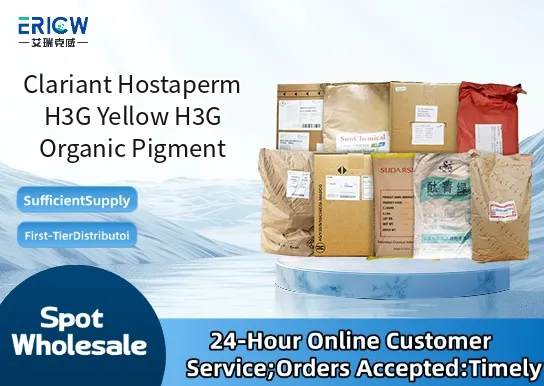
High chroma yellow shade with excellent lightfastness and weather resistance.
Outstanding thermal stability suitable for high-temperature processing up to 280 °C.
Good dispersibility in both polar and non-polar polymer matrices.
Low migration tendency, ensuring color consistency in demanding applications.
Compliant with major global regulatory frameworks including REACH and FDA 21 CFR for selected applications.
Polyolefin masterbatches (PP, PE) for automotive interior components.
Engineering plastics including ABS, PS, and PC for consumer electronics housings.
Industrial coatings requiring durable, non-fading yellow coloration.
Flexible PVC applications such as wire & cable sheathing and flooring.
Food-contact-compliant packaging films where regulatory approval is required.
| Chemical Type | Disazo pigment (Pigment Yellow 154) |
| Product Form | Free-flowing powder |
| Appearance | Yellow to greenish-yellow fine powder |
| Primary Applications | Polyolefins, engineering plastics, coatings, flexible PVC |
| Key Features | High heat stability, low migration, excellent dispersion |
| Benefits | Consistent color performance, reduced batch variation, extended service life |
| Regulatory Status | REACH registered; FDA compliant for specific food-contact uses |
| Typical Particle Size (D50) | 0.15–0.25 µm |
Q1: What are the primary application areas for Hostaperm H3G Yellow?
A: Hostaperm H3G Yellow is widely used in high-performance industrial coatings, automotive refinish systems, and engineering plastics requiring excellent heat stability and lightfastness. It is also suitable for select printing ink formulations where strong yellow shade and good dispersibility are required.
Q2: How does Hostaperm H3G Yellow perform under thermal processing conditions?
A: As a high-molecular-weight perylene derivative, Hostaperm H3G Yellow exhibits very good thermal stability—typically supporting processing temperatures up to 280–300 °C for short durations, making it suitable for demanding plastic compounding and extrusion applications.
Q3: Is Hostaperm H3G Yellow suitable for food-contact plastics?
A: Hostaperm H3G Yellow is not pre-approved for direct food-contact applications under major global regulatory frameworks. Its use in food-contact plastics requires full formulation-level compliance assessment by the end-user, including evaluation of migration behavior and adherence to applicable local regulations.
Q4: What dispersion methods are recommended for optimal performance?
A: For best results, Hostaperm H3G Yellow should be dispersed using high-shear equipment such as three-roll mills, bead mills, or high-speed dissolvers. Pre-wetting with compatible carriers and controlled temperature management during dispersion help achieve fine particle distribution and maximize color strength and transparency.
Q5: How does Hostaperm H3G Yellow compare to other yellow organic pigments in terms of weather resistance?
A: Hostaperm H3G Yellow offers significantly improved outdoor durability compared to conventional monoazo yellows, with excellent resistance to UV radiation and atmospheric pollutants—particularly when used in acrylic- or polyester-based coating systems with appropriate UV stabilizers.
Contact With Us:
E-mail: wangxingqiang@ericwchem.com
Have a Questions? Call Us:
Add:
Building A1, Jiete Industrial Park, Huangpu District, Guangzhou City, Guangdong Province, China