English
 Español
 tiếng việt
 русский
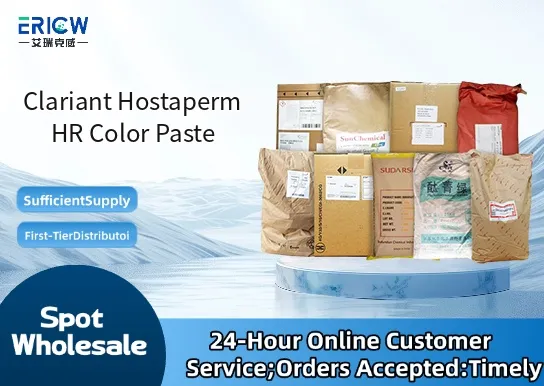
High thermal and light stability for demanding processing conditions.
Excellent dispersion performance in polyolefin and engineering thermoplastics.
Low migration and blooming resistance, ensuring long-term color consistency.
Optimized rheology for easy handling and uniform incorporation into masterbatch systems.
Compliant with global food-contact regulations (EU 10/2011, FDA 21 CFR §178.3290) where applicable.
Polypropylene (PP) and polyethylene (PE) injection-molded consumer goods.
Automotive interior components requiring high UV and heat resistance.
Household appliances with stringent color durability and regulatory requirements.
Food packaging films and containers requiring food-contact compliance.
Technical parts in electrical and electronic housings.
| Chemical Type | Organic pigment-based color paste |
| Product Form | Paste (liquid dispersion) |
| Appearance | Homogeneous, viscous paste; color varies by shade |
| Primary Applications | Polyolefins, engineering plastics, food-contact & automotive-grade compounds |
| Key Features | Thermal stability up to 300°C, low volatility, excellent batch-to-batch reproducibility |
| Benefits | Reduced filtration pressure, minimal equipment fouling, consistent color strength |
| Storage Conditions | Store at 15–25°C; protect from freezing and direct sunlight |
| Shelf Life | 24 months from date of manufacture under recommended storage |
Q1: What is the primary application field for Hostaperm HR Color Paste?
A: Hostaperm HR Color Paste is specifically developed for high-performance coloring of engineering thermoplastics—especially polyamide (PA6, PA66), polybutylene terephthalate (PBT), and polyphenylene sulfide (PPS)—in demanding applications such as automotive under-hood components, electrical connectors, and technical parts requiring excellent thermal stability and color consistency.
Q2: How does Hostaperm HR differ from standard organic color pastes in terms of heat resistance?
A: Hostaperm HR features a specially engineered pigment system with enhanced thermal stability, enabling it to withstand processing temperatures up to 300 °C without significant color shift or degradation—making it suitable for high-melt-index engineering resins processed via injection molding or extrusion under demanding conditions.
Q3: Is Hostaperm HR Color Paste compatible with glass-fiber reinforced polymers?
A: Yes, Hostaperm HR is formulated to maintain dispersion stability and color uniformity in glass-fiber reinforced polyamides and PBT. Its rheology and carrier system are optimized to minimize pigment agglomeration and ensure consistent distribution even in highly filled compounds.
Q4: What is the typical dosage range for Hostaperm HR in engineering plastic formulations?
A: Dosage depends on the target shade depth and substrate, but it is typically used at low concentrations—generally ranging from 0.1% to 2% by weight—due to its high pigment loading and strong tinting strength.
Q5: Does Hostaperm HR require pre-drying before use in moisture-sensitive polymers?
A: While Hostaperm HR itself has low inherent moisture sensitivity, best practice recommends conditioning the paste alongside the base polymer—particularly for hygroscopic resins like polyamide—to ensure optimal melt homogeneity and avoid potential surface defects during processing.
Contact With Us:
E-mail: wangxingqiang@ericwchem.com
Have a Questions? Call Us:
Add:
Building A1, Jiete Industrial Park, Huangpu District, Guangzhou City, Guangdong Province, China