English
 Español
 tiếng việt
 русский
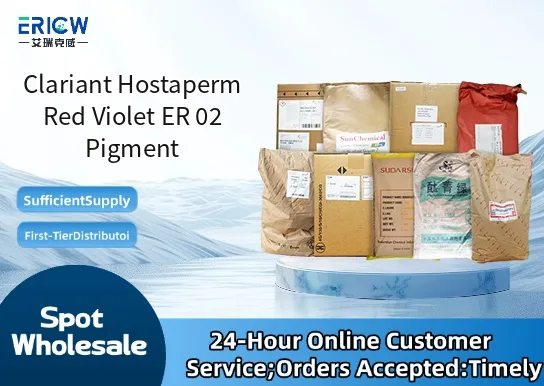
Excellent heat stability suitable for high-temperature processing up to 280 °C.
High tinctorial strength and clean red-violet shade with strong bluish undertone.
Good lightfastness (ISO 105-B02, Grade 7–8) and weather resistance in outdoor applications.
Outstanding migration resistance in PVC, polyolefins, and styrenic polymers.
Low volatile organic content (VOC), compliant with stringent regulatory requirements for consumer goods.
Coloration of rigid and flexible PVC for building & construction profiles.
Masterbatch formulations for polypropylene (PP) and polyethylene (PE) packaging films.
Automotive interior plastics requiring long-term color retention and thermal stability.
Engineering plastics including ABS and PS for consumer electronics housings.
Food-contact-compliant plastic containers and caps (subject to local regulatory approval).
| Chemical Type | Quinacridone derivative |
| Product Form | Free-flowing powder |
| Appearance | Deep red-violet granular powder |
| Primary Applications | Polyolefins, PVC, ABS, PS, engineering plastics |
| Key Features | High thermal stability, excellent dispersion, low dusting |
| Benefits | Consistent batch-to-batch color, minimal filter pressure build-up |
| Regulatory Compliance | EU REACH registered; compliant with FDA 21 CFR §178.3297 (for specific use conditions) |
| Storage Conditions | Store in cool, dry place below 30 °C; protect from moisture and direct sunlight |
Q1: What is the primary chemical class of Hostaperm Red Violet ER 02?
A: Hostaperm Red Violet ER 02 is a high-performance quinacridone-based organic pigment, offering excellent lightfastness, weather resistance, and thermal stability typical of this pigment family.
Q2: Is this pigment suitable for use in food-contact plastics?
A: Hostaperm Red Violet ER 02 is not approved for direct food-contact applications under major global regulatory frameworks. It is intended for non-food-contact industrial plastics, coatings, and specialty inks where high chroma and durability are required.
Q3: How does its dispersion behavior compare in PVC versus polyolefins?
A: The pigment exhibits good dispersibility in rigid and flexible PVC formulations due to its optimized surface treatment. In polyolefins, it requires robust dispersion protocols—such as high-shear compounding or masterbatch dilution—to achieve optimal color development and stability.
Q4: Can it be used in water-based systems?
A: While primarily designed for solvent-based and melt-processing applications, Hostaperm Red Violet ER 02 can be formulated into aqueous dispersions using appropriate surfactants and stabilization techniques—though performance may vary depending on pH, ionic strength, and binder compatibility.
Q5: What is the recommended dosage range for achieving full opacity in standard plastic applications?
A: Dosage depends on the substrate, desired shade depth, and processing conditions, but it is typically used at low concentrations—generally ranging from 0.1% to 2% by weight—to achieve strong tinting strength and good opacity in most thermoplastics.
Contact With Us:
E-mail: wangxingqiang@ericwchem.com
Have a Questions? Call Us:
Add:
Building A1, Jiete Industrial Park, Huangpu District, Guangzhou City, Guangdong Province, China