English
 Español
 tiếng việt
 русский
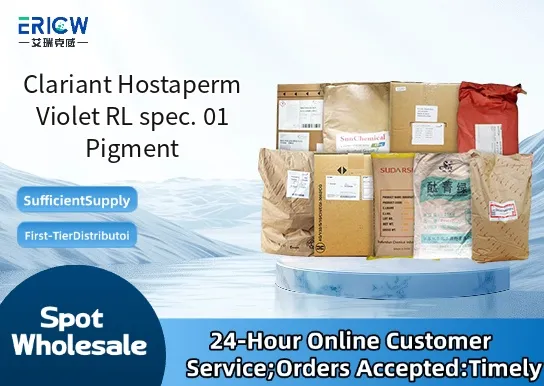
High chroma violet shade with excellent lightfastness and weather resistance.
Outstanding thermal stability suitable for high-temperature processing up to 250 °C.
Good dispersibility in both polar and non-polar polymer matrices.
Low migration tendency, ensuring color permanence in demanding applications.
Compliant with major global regulatory frameworks including REACH and RoHS.
Automotive interior and exterior plastic components.
Engineering thermoplastics such as polyamide (PA), polycarbonate (PC), and PBT.
Household appliance housings and consumer electronics enclosures.
Industrial coatings requiring long-term UV and thermal durability.
Food-contact-compliant packaging films (subject to local regulatory approval).
| Chemical Type | Quinacridone derivative |
| Product Form | Fine crystalline powder |
| Appearance | Reddish violet powder |
| Primary Applications | Plastics, coatings, and high-performance inks |
| Key Features | High tinctorial strength, excellent heat stability |
| Benefits | Consistent batch-to-batch color reproducibility |
| Recommended Dispersing Media | Aliphatic hydrocarbons, aromatic solvents, and polar resins |
| Storage Conditions | Store in cool, dry place away from direct sunlight |
Q1: What is the primary chemical class and pigment type of Hostaperm Violet RL spec. 01?
A: Hostaperm Violet RL spec. 01 is a high-performance, polycyclic quinacridone-based organic pigment, belonging to the violet shade family. It is engineered for exceptional lightfastness, thermal stability, and color strength in demanding polymer and coating applications.
Q2: Is this pigment suitable for use in food-contact plastics?
A: Hostaperm Violet RL spec. 01 is not pre-approved for direct food-contact applications under major regulatory frameworks unless specifically certified by Clariant for a given formulation and processing condition. Customers must consult Clariant’s regulatory documentation and conduct appropriate compliance testing for their intended end-use.
Q3: How does this pigment perform during high-temperature processing, such as injection molding of engineering thermoplastics?
A: This grade exhibits excellent thermal stability, maintaining color integrity and minimal decomposition up to typical processing temperatures for polyolefins, polyesters, and polycarbonates. Its performance is optimized for melt-processing conditions where pigment dispersion and heat resistance are critical.
Q4: What is the recommended method for achieving optimal dispersion in polymer systems?
A: Optimal dispersion is typically achieved using high-shear compounding techniques—such as twin-screw extrusion—with proper screw design and residence time. Pre-dispersed masterbatches formulated with compatible carriers are also widely used to ensure uniformity and reproducibility in final products.
Q5: Can Hostaperm Violet RL spec. 01 be used in water-based coatings or inks?
A: While primarily developed for solvent-based and polymer systems, it can be incorporated into aqueous dispersions using specialized surfactant-assisted milling or microencapsulation technologies. However, its compatibility and stability in water-based media depend heavily on formulation pH, ionic strength, and dispersant selection—preliminary testing is strongly advised.
Contact With Us:
E-mail: wangxingqiang@ericwchem.com
Have a Questions? Call Us:
Add:
Building A1, Jiete Industrial Park, Huangpu District, Guangzhou City, Guangdong Province, China