English
 Español
 tiếng việt
 русский
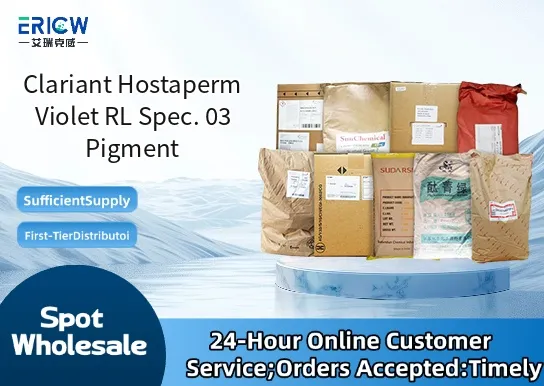
High chroma violet shade with excellent bluish-red undertone for vibrant, clean coloration.
Outstanding thermal stability suitable for high-temperature processing up to 280 °C.
Good lightfastness and weather resistance in outdoor applications.
Excellent dispersibility in both polar and non-polar polymer matrices.
Compliant with major global regulatory frameworks including REACH and RoHS.
Polyolefin coloring (PP, PE) for automotive interior parts and consumer goods.
Engineering plastics including ABS, PS, and PC for electronic housings and appliances.
Masterbatch production for fiber and film applications requiring consistent hue and batch-to-batch reproducibility.
Coating systems for industrial and architectural finishes where color strength and durability are critical.
Plastic packaging requiring FDA-compliant colorants for non-food-contact applications.
| Chemical Type | Quinacridone derivative |
| Product Form | Fine crystalline powder |
| Appearance | Violet to reddish-violet powder |
| Primary Applications | Polyolefins, engineering plastics, masterbatches, coatings |
| Key Features | High tinctorial strength, good heat stability, low migration |
| Benefits | Bright shade, excellent processability, regulatory compliance |
| Recommended Carrier | HDPE or LDPE-based carrier for masterbatches |
| Storage Conditions | Store in cool, dry place away from direct sunlight and moisture |
Q1: What is the primary chemical class of Hostaperm Violet RL Spec. 03?
A: Hostaperm Violet RL Spec. 03 is a high-performance perylene-based organic pigment, belonging to the perylene diimide family, known for exceptional lightfastness, thermal stability, and resistance to migration in demanding polymer applications.
Q2: Is this pigment suitable for food-contact plastics?
A: Hostaperm Violet RL Spec. 03 is not certified for direct food-contact applications under major global regulatory frameworks. It is intended for non-food-contact industrial and decorative uses, including automotive interior parts, technical films, and general-purpose engineering thermoplastics.
Q3: Which polymers show optimal dispersion and color development with this pigment?
A: This pigment demonstrates excellent compatibility and dispersion in polyolefins (PP, PE), polystyrene, ABS, and engineering resins such as PA6 and PBT. Performance may vary depending on processing conditions and masterbatch formulation—pre-dispersed masterbatches are recommended for consistent results.
Q4: How does Hostaperm Violet RL Spec. 03 compare to standard quinacridone violets in terms of heat stability?
A: Hostaperm Violet RL Spec. 03 offers significantly higher thermal stability than conventional quinacridone violets, maintaining color integrity during high-temperature processing of engineering plastics (e.g., up to 300 °C for short residence times), making it suitable for demanding injection molding and extrusion applications.
Contact With Us:
E-mail: wangxingqiang@ericwchem.com
Have a Questions? Call Us:
Add:
Building A1, Jiete Industrial Park, Huangpu District, Guangzhou City, Guangdong Province, China