English
 Español
 tiếng việt
 русский
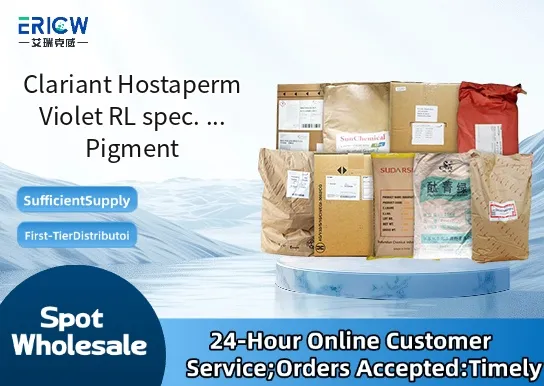
High chroma violet shade with excellent bluish undertone for vibrant, clean coloration.
Outstanding thermal stability up to 280 °C, suitable for demanding polymer processing conditions.
Excellent lightfastness and weather resistance (ISO 105-B02, grade 7–8) in outdoor applications.
Good dispersibility in both polar and non-polar media, enabling efficient incorporation into masterbatches.
REACH-compliant and free of restricted aromatic amines per EU Directive 2002/61/EC.
Polyolefin fibers and films (e.g., PP spunbond, HDPE packaging).
Engineering plastics including ABS, PC, and PA for automotive interior components.
Automotive water-based coatings requiring high gloss and UV durability.
PVC rigid profiles and flexible calendered sheets for architectural and medical uses.
High-performance inks for gravure and flexographic printing on synthetic substrates.
| Chemical Type | Quinacridone derivative |
| Product Form | Free-flowing powder |
| Appearance | Deep violet crystalline powder |
| Primary Applications | Polymer coloration, coatings, inks |
| Key Features | Thermal stability, lightfastness, dispersibility |
| Benefits | Color consistency, low migration, process robustness |
| Regulatory Status | REACH registered; compliant with FDA 21 CFR §178.3290 (for indirect food contact) |
| Recommended Carrier | Non-ionic surfactant systems or polyethylene wax |
Q1: What are the primary application areas for Hostaperm Violet RL?
A: Hostaperm Violet RL is widely used in high-performance industrial coatings, automotive refinish systems, and engineering plastics where excellent lightfastness, thermal stability, and color strength are required. It is also suitable for selected ink formulations demanding strong violet hue and good dispersion characteristics.
Q2: Is Hostaperm Violet RL compatible with common polymer matrices such as polyolefins or PVC?
A: Yes — Hostaperm Violet RL demonstrates good compatibility with a range of thermoplastics including polyolefins (PP, PE), PVC, and ABS. Its molecular structure supports stable dispersion and minimal plate-out during processing, though optimal performance requires appropriate carrier selection and dispersion protocols.
Q3: How should this pigment be dispersed to achieve maximum color development and stability?
A: For optimal results, Hostaperm Violet RL should be dispersed using high-shear equipment such as three-roll mills, bead mills, or high-speed dissolvers. Pre-wetting with compatible solvents or resins is recommended, and stabilization with appropriate dispersants helps maintain colloidal integrity and prevent flocculation in liquid systems.
Q4: Does Hostaperm Violet RL meet regulatory requirements for use in food-contact applications?
A: Hostaperm Violet RL is not approved for direct food-contact applications under major global regulatory frameworks. It is intended for industrial and decorative uses where regulatory compliance for food contact is not required. Always consult Clariant’s latest regulatory documentation and local authorities before final application approval.
Q5: What is the typical dosage range when using Hostaperm Violet RL in plastic coloration?
A: Dosage depends on the desired shade intensity and substrate, but it is generally used at low concentrations — typically ranging from 0.1% to 2% by weight in most thermoplastic applications. Higher loadings may be needed in opaque systems or to compensate for substrate interactions, while transparent applications often require careful optimization to avoid haze.
Contact With Us:
E-mail: wangxingqiang@ericwchem.com
Have a Questions? Call Us:
Add:
Building A1, Jiete Industrial Park, Huangpu District, Guangzhou City, Guangdong Province, China