English
 Español
 tiếng việt
 русский
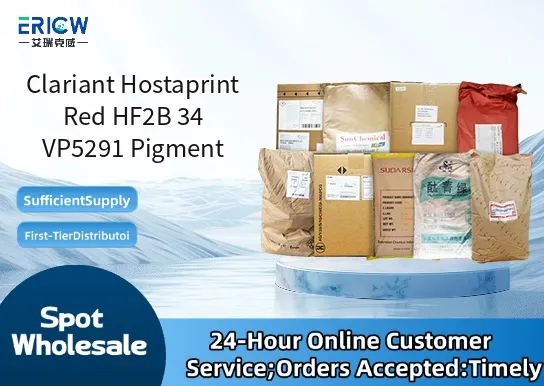
High chroma and excellent color strength for vivid, consistent red shades.
Outstanding heat stability suitable for high-temperature processing up to 220 °C.
Good lightfastness and weather resistance in demanding outdoor applications.
Optimized dispersibility in polar and non-polar polymer systems including PVC and polyolefins.
Compliant with major global regulatory frameworks including EU REACH and US FDA 21 CFR for indirect food contact applications.
PVC profiles and window frames requiring long-term color retention.
Masterbatch for polypropylene (PP) and polyethylene (PE) packaging films.
Exterior automotive trim components exposed to UV radiation and thermal cycling.
Industrial coatings for metal and plastic substrates needing high-opacity reds.
Flexible and rigid vinyl flooring with stringent migration and bleed resistance requirements.
| Chemical Type | Organic Pigment – Monoazo, Benzimidazolone derivative |
| Product Form | Free-flowing powder |
| Appearance | Red-violet powder with bluish undertone |
| Primary Applications | PVC, polyolefins, industrial coatings, flexible vinyl |
| Key Features | Heat stability, dispersion efficiency, lightfastness (ISO 105-B02: 7–8), weather resistance (ISO 11341: 6–7) |
| Benefits | Low dust generation, excellent batch-to-batch consistency, minimal plate-out in extrusion |
| Regulatory Status | EU REACH registered; compliant with FDA 21 CFR §178.3297 for polymer additives |
| Recommended Processing Temperature Range | 160–220 °C |
Q1: What is the primary application area for Hostaprint Red HF2B 34 VP5291?
A: This pigment is specifically engineered for high-performance gravure and flexographic printing inks used on packaging substrates, including polyolefins, PET, and paperboard—particularly where excellent rub resistance, gloss retention, and thermal stability during drying or lamination are required.
Q2: Is Hostaprint Red HF2B 34 VP5291 suitable for food-contact packaging applications?
A: Yes, it is designed to meet regulatory expectations for indirect food contact in printing inks, provided it is used in accordance with applicable regional frameworks (e.g., EU Plastics Regulation, Swiss Ordinance, or FDA 21 CFR §178.3298) and within validated ink formulations. Final compliance depends on full system validation by the ink manufacturer.
Q3: How does this pigment perform under high-temperature processing conditions?
A: Hostaprint Red HF2B 34 VP5291 exhibits good thermal stability up to typical ink drying and lamination temperatures, maintaining color strength and minimizing volatile decomposition—making it suitable for heat-set ovens and extrusion-lamination processes without significant hue shift or fume generation.
Q4: What dispersion characteristics can be expected in solvent-based ink systems?
A: The pigment is supplied in a highly dispersible form optimized for conventional solvent-based gravure and flexo vehicles. It typically achieves fine particle distribution with standard high-shear dispersion equipment, supporting high-gloss finishes and consistent print uniformity across extended press runs.
Q5: What is the recommended dosage range in finished ink formulations?
A: Dosage is formulation-dependent but generally ranges from 0.1% to 2% by weight relative to total ink solids, balancing color strength, transparency, and rheological behavior. Optimal loading should be determined through lab-scale trials and press testing.
Contact With Us:
E-mail: wangxingqiang@ericwchem.com
Have a Questions? Call Us:
Add:
Building A1, Jiete Industrial Park, Huangpu District, Guangzhou City, Guangdong Province, China