English
 Español
 tiếng việt
 русский
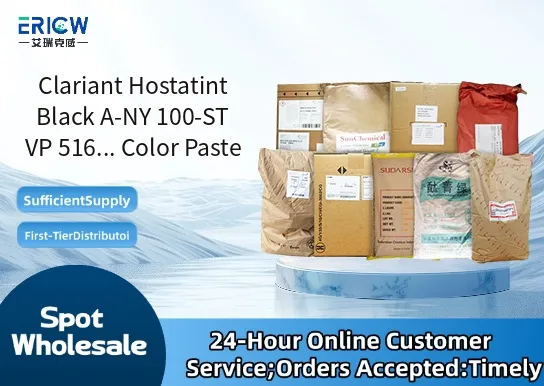
Highly concentrated, solvent-based black color paste with excellent tinctorial strength.
Optimized for compatibility with polyolefin (PP/PE) and engineering thermoplastics including ABS and PS.
Delivers consistent jet-black shade with low haze and superior dispersion stability in masterbatch formulations.
Free of heavy metals and compliant with major global regulatory frameworks including EU REACH and US FDA 21 CFR for indirect food contact applications.
Engineered for low dust generation and improved handling safety during high-speed compounding processes.
Automotive interior and exterior plastic components (dashboards, trim, bumpers).
Packaging films and containers requiring high-opacity black pigmentation.
Consumer electronics housings and appliance parts (e.g., washing machine drums, vacuum casings).
Industrial and agricultural polyethylene (PE) and polypropylene (PP) products including pipes, tanks, and crates.
Technical textiles and synthetic fibers where UV-stable black coloration is required.
| Chemical Type | Organic pigment dispersion in aromatic-free hydrocarbon solvent |
| Product Form | Liquid color paste |
| Appearance | Viscous black liquid with uniform consistency |
| Primary Applications | Polyolefins (PP, PE), ABS, PS, and engineering thermoplastics |
| Key Features | High pigment loading, excellent thermal stability up to 280 °C |
| Benefits | Reduced dosage requirement, minimal plate-out, stable rheology in masterbatch extrusion |
| Storage Conditions | Store at 10–30 °C; protect from frost and direct sunlight |
| Shelf Life | 24 months from date of manufacture when stored properly |
Q1: What types of polymers is this color paste compatible with?
A: Clariant Hostatint Black A-NY 100-ST VP 516... Color Paste is formulated for compatibility with a broad range of thermoplastics, including polyolefins (PP, PE), styrenics (PS, ABS), and engineering resins such as PA and PC. Compatibility should always be verified under actual processing conditions.
Q2: How should this color paste be incorporated into polymer melts?
A: It is typically introduced via gravimetric or volumetric dosing directly into the extruder feed throat or injection molding hopper. Pre-blending with base resin prior to melting is also acceptable and may improve dispersion uniformity, especially in high-viscosity systems.
Q3: Does this product contain heavy metals or restricted substances?
A: This color paste is manufactured without intentionally added heavy metals (e.g., lead, cadmium, mercury, hexavalent chromium) and complies with Clariant’s internal Restricted Substances List (RSL). Regulatory compliance for specific end-use applications remains the responsibility of the formulator.
Q4: What is the typical dosage range for achieving full black opacity?
A: Full black opacity is generally achieved at concentrations between 0.1% and 2% by weight, depending on polymer type, melt viscosity, processing temperature, and required depth of shade. Lower dosages often suffice in thin-walled parts or high-clarity matrices.
Q5: Is this color paste suitable for food-contact or medical-grade applications?
A: This product is not pre-qualified for food-contact or medical applications. Customers intending such use must conduct full regulatory evaluation—including migration testing and biocompatibility assessment—according to applicable regional requirements and final part specifications.
Contact With Us:
E-mail: wangxingqiang@ericwchem.com
Have a Questions? Call Us:
Add:
Building A1, Jiete Industrial Park, Huangpu District, Guangzhou City, Guangdong Province, China