English
 Español
 tiếng việt
 русский
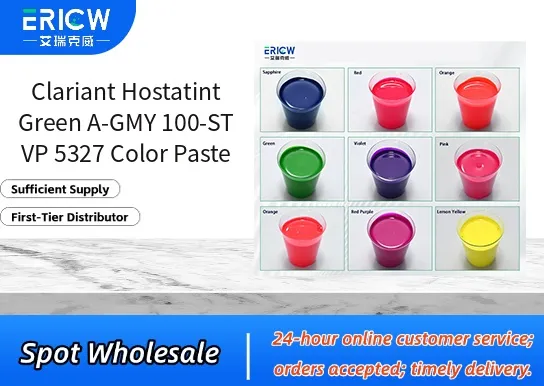
High chroma green shade with excellent batch-to-batch color consistency.
Optimized for compatibility with polyolefin and PVC compounds in masterbatch applications.
Thermally stable up to 260 °C, enabling processing in high-shear extrusion and injection molding.
Low migration and bleed resistance, ensuring color integrity in demanding end-use environments.
Free of heavy metals and compliant with major global regulatory frameworks including EU REACH and US FDA 21 CFR.
Polypropylene (PP) and polyethylene (PE) packaging films and containers.
Rigid PVC profiles for window frames, pipes, and cladding.
Automotive interior components including dashboards and trim parts.
Household appliances housings and consumer electronics casings.
Technical textiles requiring durable, lightfast coloration.
| Chemical Type | Organic pigment dispersion (phthalocyanine-based) |
| Product Form | Concentrated liquid color paste |
| Appearance | Viscous green paste, homogeneous without visible particles |
| Primary Applications | Masterbatch for polyolefins and rigid PVC |
| Key Features | High thermal stability, low migration, REACH-compliant |
| Recommended Carrier | Non-ionic polymeric carrier system |
| VOC Content | < 1 % w/w |
| Storage Conditions | Store at 10–30 °C; protect from freezing and direct sunlight |
Q1: What types of polymers is this color paste compatible with?
A: Clariant Hostatint Green A-GMY 100-ST VP 5327 is formulated for use in polyolefins, including PP and HDPE, as well as in selected engineering thermoplastics. Compatibility should be verified under actual processing conditions due to variations in polymer grade, additives, and thermal history.
Q2: Is this product suitable for food-contact applications?
A: This color paste is designed for applications where regulatory compliance is required; however, final food-contact suitability depends on the complete formulation, processing parameters, and applicable regional regulations. Users must conduct full regulatory assessment and obtain appropriate documentation from Clariant before use in food-contact articles.
Q3: How should this color paste be incorporated into a polymer melt?
A: It is typically introduced via gravimetric or volumetric dosing systems directly into the extruder feed throat or upstream of the melting zone. Good dispersion is achieved under standard compounding conditions; pre-drying is not required, but storage in sealed containers under cool, dry conditions is recommended to maintain consistency.
Q4: What is the typical dosage range for achieving target shade intensity?
A: Dosage depends on the base polymer, desired color strength, and processing method, but it is generally used at low concentrations—typically ranging from 0.1% to 2% by weight—to achieve full shade development without compromising physical properties.
Q5: Does this color paste contain heavy metals or restricted substances?
A: Hostatint Green A-GMY 100-ST VP 5327 is manufactured without intentionally added lead, cadmium, mercury, or hexavalent chromium, in alignment with Clariant’s global substance restrictions policy. It complies with major industry standards for heavy metal content, though specific declarations require reference to the latest Safety Data Sheet and Regulatory Compliance Statement.
Contact With Us:
E-mail: wangxingqiang@ericwchem.com
Have a Questions? Call Us:
Add:
Building A1, Jiete Industrial Park, Huangpu District, Guangzhou City, Guangdong Province, China