English
 Español
 tiếng việt
 русский
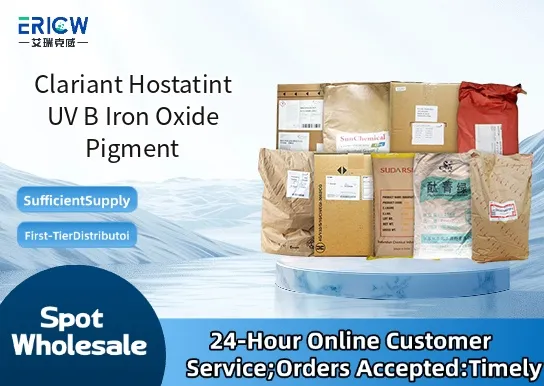
UV-stabilized iron oxide pigment engineered for enhanced lightfastness and weather resistance.
Optimized particle size distribution for improved dispersion stability in aqueous and solvent-based systems.
Low heavy metal content, compliant with global regulatory requirements including REACH and RoHS.
Consistent color strength and hue across production batches, ensuring reliable color matching.
Non-hazardous formulation suitable for industrial coatings, plastics, and construction materials.
Architectural coatings requiring long-term color retention under outdoor exposure.
Concrete and cementitious products including paving stones, façade elements, and precast concrete.
Plastic compounds for exterior applications such as garden furniture, automotive trim, and building profiles.
Industrial maintenance coatings for infrastructure, bridges, and marine environments.
Water-based decorative mortars and stucco systems.
| Chemical Type | Synthetic Iron Oxide (Fe₂O₃) |
| Product Form | Free-flowing dry powder |
| Appearance | Reddish-brown fine powder |
| Primary Applications | Coatings, construction materials, plastics |
| Key Features | UV-stabilized, low dust, excellent dispersibility |
| Benefits | Enhanced durability, consistent batch-to-batch performance, regulatory compliance |
| Density (g/cm³) | ~4.0–4.3 (typical for synthetic iron oxides) |
| pH (10% aqueous suspension) | 6.5–8.5 |
Q1: What is the primary functional advantage of Hostatint UV B compared to standard iron oxide pigments?
A: Hostatint UV B is specifically engineered for enhanced UV stability in demanding applications such as exterior coatings, automotive refinishes, and UV-curable inks. Its surface treatment and particle engineering help minimize photochemical degradation and color shift under prolonged UV exposure.
Q2: Is Hostatint UV B suitable for use in water-based systems?
A: Yes — it is designed for good dispersibility and stability in both water-based and solvent-based formulations. Optimal performance typically requires appropriate wetting agents and high-shear dispersion protocols tailored to the specific system.
Q3: How does Hostatint UV B perform in UV-curable inkjet inks?
A: It offers improved compatibility with common UV-curable monomer/oligomer systems and demonstrates reduced gelation tendency during storage. Its narrow particle size distribution supports stable jetting behavior and helps maintain nozzle reliability.
Q4: What is the typical dosage range for Hostatint UV B in industrial coating formulations?
A: Dosage depends on the desired opacity, color strength, and application method, but it is generally used at low concentrations — typically ranging from 0.1% to 2% by weight relative to the total formulation — due to its high tinting strength and efficient light absorption.
Contact With Us:
E-mail: wangxingqiang@ericwchem.com
Have a Questions? Call Us:
Add:
Building A1, Jiete Industrial Park, Huangpu District, Guangzhou City, Guangdong Province, China