English
 Español
 tiếng việt
 русский
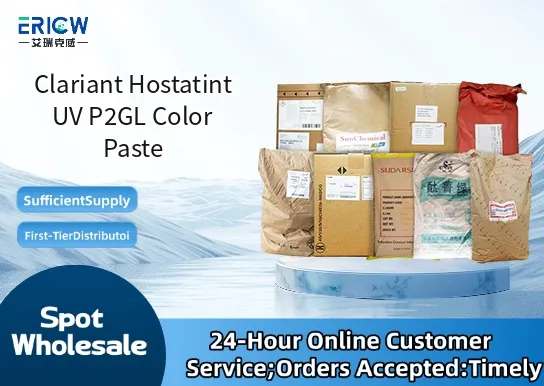
High photostability under UV exposure, ensuring long-term color integrity in demanding outdoor applications.
Excellent dispersion stability in UV-curable resin systems, minimizing settling and agglomeration.
Low migration tendency, supporting compliance with stringent regulatory requirements for functional coatings.
Optimized rheology for seamless integration into inkjet inks and screen printing formulations.
Non-hazardous formulation compliant with GHS classification and REACH SVHC-free status.
UV-curable digital inks for industrial and decorative printing on plastics and metals.
Functional coatings requiring UV resistance, such as automotive trim and electronic device housings.
Screen-printed overlays for control panels and membrane switches exposed to intense light.
UV-curable overprint varnishes and topcoats in packaging and labeling applications.
Specialty graphic arts inks for high-durability signage and architectural visualization films.
| Chemical Type | Organic pigment dispersion in UV-reactive monomer vehicle |
| Product Form | Paste (liquid dispersion) |
| Appearance | Homogeneous, viscous paste; color shade dependent on batch |
| Primary Applications | UV-curable inks, coatings, and overprint varnishes |
| Key Features | UV-stable, low-migration, ready-to-use dispersion |
| Benefits | Reduced formulation complexity, improved print consistency, enhanced weathering performance |
| Storage Conditions | Store at 10–25 °C, protect from freezing and direct sunlight |
| Shelf Life | 12 months from date of manufacture when stored properly |
Q1: What is the primary application field for Hostatint UV P2GL Color Paste?
A: Hostatint UV P2GL is specifically developed for UV-curable inks and coatings, including screen, inkjet, and flexographic formulations where high color strength, excellent dispersion stability, and minimal impact on cure speed are required.
Q2: Is this color paste compatible with common UV monomers and oligomers?
A: Yes — Hostatint UV P2GL is formulated to be compatible with standard acrylate-based UV systems, including mono- and multifunctional monomers (e.g., TMPTA, HDDA) and common epoxy or urethane acrylate oligomers. Compatibility should always be verified in the final formulation due to system-specific interactions.
Q3: How does Hostatint UV P2GL perform under UV exposure in terms of color stability?
A: The pigment system is selected and stabilized to deliver good lightfastness and UV resistance in cured films. While not intended as a UV stabilizer itself, it maintains consistent hue and minimal fading under typical indoor UV exposure conditions when properly formulated and cured.
Q4: What is the recommended dosage range for optimal performance?
A: Dosage depends on the desired shade intensity and substrate requirements, but it is typically used at low concentrations — generally ranging from 0.1% to 2% by weight in the final UV ink or coating formulation.
Q5: Does Hostatint UV P2GL require pre-dispersion or special handling before use?
A: No — it is supplied as a ready-to-use, pre-dispersed paste with optimized rheology for easy incorporation into UV formulations. Gentle mixing is sufficient; high-shear dispersion is not required, though compatibility and homogeneity should be confirmed in the target system.
Contact With Us:
E-mail: wangxingqiang@ericwchem.com
Have a Questions? Call Us:
Add:
Building A1, Jiete Industrial Park, Huangpu District, Guangzhou City, Guangdong Province, China