English
 Español
 tiếng việt
 русский
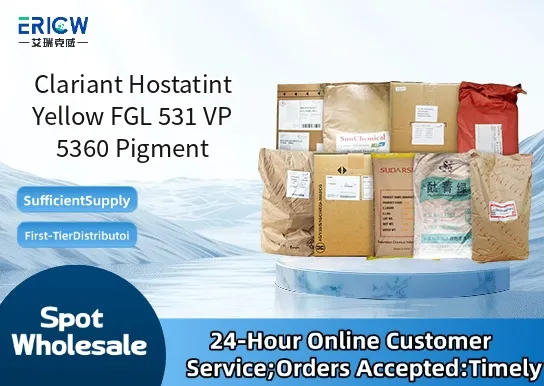
High chroma yellow shade with excellent brightness and clean greenish-yellow undertone.
Outstanding thermal stability suitable for high-temperature polymer processing up to 280 °C.
Excellent lightfastness and weather resistance in outdoor applications.
Good dispersibility in both polar and non-polar polymer matrices, including polyolefins and engineering plastics.
Compliant with major global regulatory frameworks including EU REACH and US FDA 21 CFR §178.3297 for indirect food contact applications.
Polypropylene (PP) and polyethylene (PE) injection-molded consumer goods.
Automotive interior trim components requiring long-term color retention.
Household appliances and electronic device housings.
Blown and cast films for packaging where clarity and color consistency are critical.
Technical fibers and spunbond nonwovens for industrial textiles.
| Chemical Type | Azo pigment (Benzimidazolone derivative) |
| Product Form | Free-flowing granular concentrate |
| Appearance | Yellow granules, free of visible specks or agglomerates |
| Primary Applications | Polyolefins, engineering plastics, synthetic fibers |
| Key Features | Thermal stability, lightfastness, dispersion efficiency |
| Benefits | Consistent coloration, low plate-out, high batch-to-batch reproducibility |
| Recommended Carrier | Polypropylene homopolymer |
| Typical Concentration Range | 0.1–2.0 wt% depending on substrate and opacity requirements |
Q1: What is the primary application field for Hostatint Yellow FGL 531 VP 5360?
A: This pigment is specifically developed for use in high-performance masterbatches and color concentrates for polyolefins, particularly in applications requiring excellent heat stability, low volatility, and good dispersion in injection-molded and extruded parts.
Q2: Is this pigment suitable for food-contact plastics?
A: Hostatint Yellow FGL 531 VP 5360 is designed to meet typical regulatory expectations for pigments used in food-contact polyolefin applications; however, final compliance depends on the complete formulation, processing conditions, and applicable regional regulations—users must conduct their own verification and obtain appropriate regulatory documentation before use.
Q3: How does this pigment perform under high-temperature processing?
A: It exhibits very good thermal stability, maintaining color integrity and minimal degradation during standard polyolefin processing up to 260–280 °C, making it suitable for demanding applications such as thin-wall packaging and automotive components.
Q4: What is the recommended dosage range in polyolefin masterbatches?
A: Typical dosage ranges from 0.1% to 2% by weight in the final compound, depending on the desired shade strength, polymer type, and processing method—optimal loading should be determined through lab-scale trials to balance color performance, dispersion quality, and cost efficiency.
Contact With Us:
E-mail: wangxingqiang@ericwchem.com
Have a Questions? Call Us:
Add:
Building A1, Jiete Industrial Park, Huangpu District, Guangzhou City, Guangdong Province, China