English
 Español
 tiếng việt
 русский
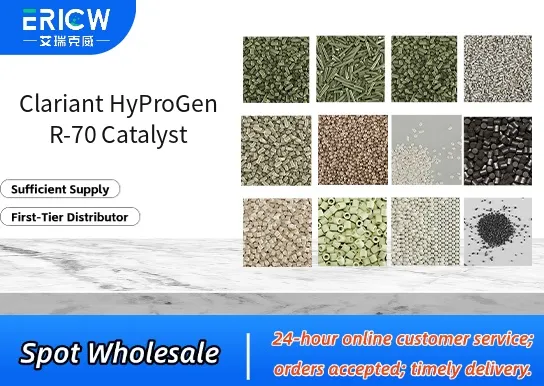
Highly selective hydrogenation catalyst optimized for reactive distillation and low-pressure operation.
Robust nickel–molybdenum active phase supported on high-surface-area alumina for enhanced stability.
Low dust generation and excellent mechanical strength to minimize pressure drop in fixed-bed reactors.
Pre-sulfided formulation enabling immediate start-up without on-site sulfidation.
Tailored pore structure facilitating efficient mass transfer for viscous or impurity-containing feedstocks.
Selective hydrogenation of alkynes and dienes in C4–C5 streams for polymer-grade olefin production.
Hydrodesulfurization (HDS) of naphtha and light gas oils in refineries with strict sulfur specifications.
Removal of trace oxygenates and unsaturated impurities in bio-derived intermediates.
Stabilization of cracked gasoline fractions prior to etherification or alkylation units.
Hydrogenation of nitroaromatics and other functionalized aromatics in fine chemical synthesis.
| Chemical Type | Ni–Mo on gamma-alumina |
| Product Form | Extrudates (cylindrical, 1.6 mm diameter) |
| Appearance | Black, free-flowing granular solid |
| Primary Applications | Selective hydrogenation, hydrodesulfurization, oxygenate removal |
| Key Features | Pre-sulfided, low-dust, high crush strength (>30 N/mm) |
| Recommended Operating Temperature Range | 120–220 °C |
| Recommended Operating Pressure Range | 10–30 bar |
| Typical Bulk Density | 0.85–0.95 g/cm³ |
Q1: What is the primary function of HyProGen R-70 in polyurethane systems?
A: HyProGen R-70 is a highly selective amine-based catalyst designed to promote urethane bond formation (reaction between isocyanates and polyols) while minimizing side reactions such as trimerization or urea formation. It supports balanced reactivity for improved processing control and final part performance.
Q2: Is HyProGen R-70 suitable for low-emission or automotive-grade PU foam applications?
A: Yes — HyProGen R-70 is formulated to support low-VOC and low-odor PU foam production. Its high catalytic efficiency allows for reduced overall amine loadings, contributing to lower residual amine content and improved emissions profiles in demanding applications such as automotive seating and interior trim.
Q3: How does HyProGen R-70 compare to traditional tertiary amine catalysts in terms of storage stability and handling?
A: HyProGen R-70 exhibits enhanced hydrolytic stability and reduced volatility compared to many conventional liquid tertiary amines. It remains homogeneous in typical polyol blends and shows minimal tendency to separate or crystallize under standard storage conditions, supporting consistent metering and long-term formulation integrity.
Q4: Can HyProGen R-70 be used in combination with other catalysts?
A: Yes — HyProGen R-70 is commonly blended with complementary catalysts (e.g., gelling or blowing agents) to fine-tune reactivity profiles. Compatibility should be verified empirically in the target formulation, but it demonstrates good miscibility with standard polyol-compatible catalysts and surfactants.
Contact With Us:
E-mail: wangxingqiang@ericwchem.com
Have a Questions? Call Us:
Add:
Building A1, Jiete Industrial Park, Huangpu District, Guangzhou City, Guangdong Province, China