English
 Español
 tiếng việt
 русский
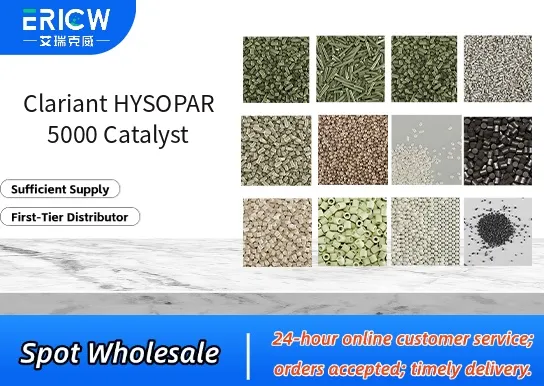
Highly selective hydrogenation catalyst optimized for paraffin saturation in hydroprocessing units.
Thermally stable nickel-molybdenum formulation with enhanced resistance to sintering under severe operating conditions.
Low-pressure operation capability, enabling energy-efficient hydrotreating without compromising conversion performance.
Controlled pore structure facilitating improved diffusion of bulky hydrocarbon molecules and reduced coke deposition.
Pre-sulfided ready-to-use form eliminates on-site sulfiding steps and reduces startup time and safety risks.
Hydrodesulfurization (HDS) of middle distillates including diesel and jet fuel.
Hydrodenitrogenation (HDN) in refinery hydrotreaters processing high-nitrogen feedstocks.
Paraffin saturation and olefin reduction in kerosene and naphtha hydrotreating units.
Upgrading of cracked feedstocks such as FCC naphtha and coker gas oil.
Co-processing of renewable feedstocks (e.g., hydrotreated vegetable oils) in existing hydrotreaters.
| Chemical Type | Ni-Mo on alumina support |
| Product Form | Extrudates (1.6 mm diameter) |
| Appearance | Black cylindrical pellets |
| Primary Applications | Hydrodesulfurization, hydrodenitrogenation, paraffin saturation |
| Key Features | Pre-sulfided, low-pressure compatible, thermally stable |
| Benefits | Reduced startup time, extended cycle length, improved product stability |
| Storage Conditions | Store in dry, ventilated area; protect from moisture and direct sunlight |
| Handling Precautions | Use appropriate PPE; avoid inhalation of dust |
Q1: What is the primary function of HYSOPAR 5000 in polymer processing?
A: HYSOPAR 5000 is a highly active hydrogenation catalyst designed to selectively saturate residual double bonds and impurities in polyolefin-based systems—particularly during post-reactor stabilization or compounding—thereby improving long-term thermal and oxidative stability of the final polymer.
Q2: Is HYSOPAR 5000 compatible with common polyolefin resins such as PP and HDPE?
A: Yes, HYSOPAR 5000 demonstrates excellent compatibility with polypropylene (PP), high-density polyethylene (HDPE), and related copolymers. It is formulated for homogeneous dispersion and remains stable under typical melt-processing conditions without inducing premature degradation or gel formation.
Q3: How should HYSOPAR 5000 be handled and stored to maintain activity?
A: As a pyrophoric transition-metal-based catalyst, HYSOPAR 5000 must be stored under inert atmosphere (e.g., nitrogen or argon) at cool, dry conditions. Exposure to air or moisture should be strictly avoided during handling. Use only in well-ventilated areas with appropriate personal protective equipment (PPE) and follow Clariant’s Safety Data Sheet (SDS) guidelines.
Q4: Can HYSOPAR 5000 be used in food-contact or medical-grade polymer applications?
A: While HYSOPAR 5000 is not pre-approved for direct food-contact use, it may be considered for certain regulated applications where full migration control, thorough purification, and end-product compliance verification are implemented by the compounder or converter—subject to final regulatory assessment and customer-specific qualification protocols.
Contact With Us:
E-mail: wangxingqiang@ericwchem.com
Have a Questions? Call Us:
Add:
Building A1, Jiete Industrial Park, Huangpu District, Guangzhou City, Guangdong Province, China