English
 Español
 tiếng việt
 русский
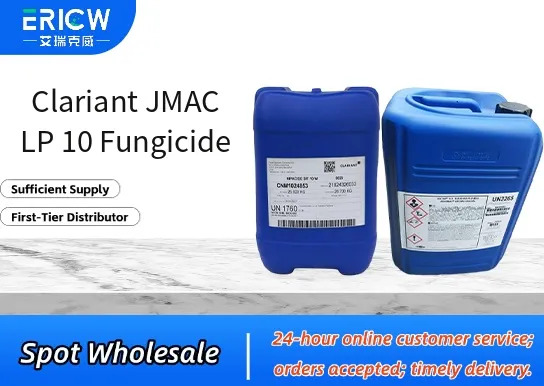
Broad-spectrum fungicidal activity against key saprophytic and pathogenic fungi in industrial water systems.
Low-toxicity, non-oxidizing formulation compatible with common corrosion inhibitors and scale controllers.
Stable performance across a wide pH range (5.0–9.5) and elevated temperatures up to 60 °C.
Designed for continuous or intermittent dosing in recirculating cooling water, process water, and closed-loop systems.
Biodegradable under aerobic conditions, supporting sustainable water management practices.
Industrial cooling towers and heat exchangers in power generation facilities.
Process water circuits in pulp and paper manufacturing plants.
Recirculating water systems in petrochemical and refinery operations.
Make-up water treatment for HVAC chillers and air conditioning systems.
Preservation of treated water in metalworking fluid sumps and ancillary equipment.
| Chemical Type | Heterocyclic nitrogen-containing biocide (active ingredient: 1,2-benzisothiazolin-3-one derivative) |
| Product Form | Aqueous liquid concentrate |
| Appearance | Clear, pale yellow to amber liquid |
| pH (1% aqueous solution) | 7.0–8.5 |
| Density (20 °C) | 1.08–1.12 g/cm³ |
| Solubility | Completely miscible with water |
| Storage Stability | ≥24 months in original sealed container at 5–30 °C |
| Primary Applications | Cooling water, process water, and closed-loop industrial water systems |
Q1: What is the primary mode of action of Clariant JMAC LP 10 Fungicide?
A: Clariant JMAC LP 10 Fungicide functions as a broad-spectrum, contact and protective fungicidal agent, primarily inhibiting fungal spore germination and mycelial growth on surfaces. Its formulation is designed to provide durable antifungal performance in polymer-based systems without compromising material integrity.
Q2: In which types of polymer systems is JMAC LP 10 typically incorporated?
A: JMAC LP 10 is commonly used in thermoplastic polymers such as polyolefins (PP, PE), PVC, and engineering plastics where long-term resistance to mold, mildew, and fungal colonization is required—especially in humid or outdoor applications like building materials, automotive interior components, and technical textiles.
Q3: How does JMAC LP 10 perform under thermal processing conditions?
A: JMAC LP 10 exhibits good thermal stability and is suitable for conventional polymer processing methods including extrusion, injection molding, and calendering. It maintains functional efficacy without significant degradation or volatilization at typical melt processing temperatures encountered in polyolefin and PVC systems.
Q4: Is JMAC LP 10 compatible with common polymer additives?
A: Yes, JMAC LP 10 demonstrates good compatibility with standard stabilizers, plasticizers, fillers, and pigments used in industrial polymer formulations. Compatibility testing under end-use conditions is recommended to confirm performance consistency, particularly when used alongside highly reactive or acidic additives.
Contact With Us:
E-mail: wangxingqiang@ericwchem.com
Have a Questions? Call Us:
Add:
Building A1, Jiete Industrial Park, Huangpu District, Guangzhou City, Guangdong Province, China