English
 Español
 tiếng việt
 русский
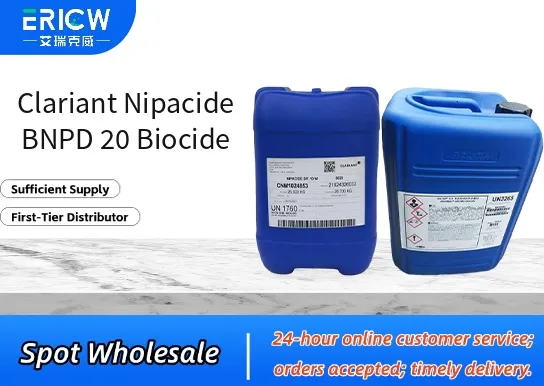
Effective broad-spectrum biocide against bacteria, fungi, and algae in water-based systems.
Stable across a wide pH range (pH 4–10), ensuring consistent performance in diverse process conditions.
Low volatility and minimal odor, supporting safer handling and reduced workplace exposure concerns.
Compatible with common industrial additives, including surfactants, dispersants, and corrosion inhibitors.
Non-oxidizing mode of action, minimizing degradation of system components and avoiding interference with redox-sensitive processes.
Preservation of water-based metalworking fluids and coolants.
Microbial control in industrial process water circuits, including cooling towers and closed-loop systems.
Protection of latex emulsions, paints, and coatings during manufacturing and storage.
Biostabilization of adhesives, sealants, and construction chemicals.
Maintenance of hygiene in paper mill white water systems and coating formulations.
| Chemical Type | Nitrophenyl derivative (BNPD-based) |
| Product Form | Liquid concentrate |
| Appearance | Amber to light brown clear liquid |
| pH (1% aqueous solution) | 6.5–7.5 |
| Density (20°C) | 1.12–1.16 g/cm³ |
| Solubility | Completely miscible with water and most polar organic solvents |
| Primary Applications | Industrial water treatment, metalworking fluids, coatings, adhesives, papermaking |
| Key Features | Broad-spectrum efficacy, non-oxidizing, pH-stable, low-volatility |
Q1: What is the primary mode of action of Nipacide BNPD 20?
A: Nipacide BNPD 20 functions as a broad-spectrum biocide through controlled release of active isothiazolone derivatives, which disrupt essential cellular processes in bacteria, yeasts, and fungi by interfering with sulfhydryl-dependent enzymes and membrane integrity.
Q2: In which types of industrial formulations is Nipacide BNPD 20 most commonly used?
A: It is widely applied in water-based industrial coatings, adhesives, sealants, construction chemicals, and metalworking fluids—particularly where long-term microbial stability and compatibility with common formulation ingredients are required.
Q3: How stable is Nipacide BNPD 20 under typical storage and processing conditions?
A: The product demonstrates good thermal and hydrolytic stability across a broad pH range (approximately pH 2–12) and remains effective during standard formulation and storage conditions when protected from prolonged exposure to strong oxidizers or highly alkaline environments.
Q4: Is Nipacide BNPD 20 compatible with common thickeners, surfactants, and co-biocides?
A: Yes—it exhibits broad compatibility with associative and non-associative thickeners, anionic and nonionic surfactants, and many common co-biocides such as BIT and CMIT/MIT, though compatibility testing in the final formulation is always recommended to confirm performance and stability.
Q5: What is the typical dosage range for effective preservation using Nipacide BNPD 20?
A: Effective dosage generally ranges from 0.1% to 2% by weight of the final formulation, depending on microbial challenge level, raw material bioburden, and system pH and temperature; optimization should be performed via challenge testing under representative conditions.
Contact With Us:
E-mail: wangxingqiang@ericwchem.com
Have a Questions? Call Us:
Add:
Building A1, Jiete Industrial Park, Huangpu District, Guangzhou City, Guangdong Province, China