English
 Español
 tiếng việt
 русский
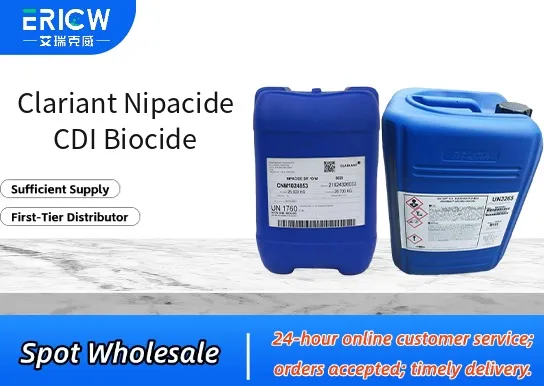
Highly effective broad-spectrum biocide against bacteria, fungi, and algae.
Stable in a wide pH range (pH 4–10), ensuring compatibility with diverse formulation chemistries.
Low volatility and minimal odor, enhancing workplace safety and user acceptance.
Compatible with common surfactants, thickeners, and other water-based additives.
Non-oxidizing mode of action, reducing corrosion risk to metal components in process systems.
Preservation of water-based industrial coatings and paints.
Microbial control in metalworking fluids and coolants.
Protection of adhesives, sealants, and construction chemicals during storage and use.
Stabilization of latex emulsions and polymer dispersions.
Preservation of cleaning formulations, including industrial and institutional cleaners.
| Chemical Type | 1,3-Bis(2-hydroxyethyl)urea derivative (CDI-based) |
| Product Form | Liquid concentrate |
| Appearance | Clear to slightly hazy, colorless to pale yellow liquid |
| pH (1% aqueous solution) | 6.5–8.5 |
| Solubility | Completely miscible with water |
| Density (20 °C) | 1.08–1.12 g/cm³ |
| Primary Applications | Preservative for water-based industrial formulations |
| Key Features | Broad-spectrum efficacy, low toxicity profile, formulation stability |
Q1: What is the primary mode of action of Nipacide CDI Biocide?
A: Nipacide CDI Biocide functions primarily through controlled release of formaldehyde, which disrupts essential cellular processes in microorganisms—including protein denaturation and nucleic acid crosslinking—providing broad-spectrum antimicrobial activity against bacteria, yeasts, and molds.
Q2: In which types of industrial formulations is Nipacide CDI Biocide commonly used?
A: It is widely applied in water-based industrial systems such as metalworking fluids, latex paints and coatings, adhesives, sealants, construction chemicals, and cleaning concentrates—where long-term preservation against microbial spoilage is required under varying pH and temperature conditions.
Q3: How stable is Nipacide CDI Biocide in formulated products over time?
A: Nipacide CDI Biocide exhibits good hydrolytic stability in neutral to mildly alkaline aqueous systems and maintains effective preservative performance throughout typical shelf life when stored under recommended conditions—avoiding prolonged exposure to high temperatures or strong acids.
Q4: Is Nipacide CDI Biocide compatible with common thickeners, surfactants, and corrosion inhibitors?
A: Yes, it demonstrates broad compatibility with many anionic, nonionic, and amphoteric surfactants, associative and cellulosic thickeners, and standard corrosion inhibitors used in industrial formulations—though compatibility testing under actual use conditions is recommended for new combinations.
Q5: What is the typical dosage range for effective preservation with Nipacide CDI Biocide?
A: Dosage depends on formulation composition, microbial challenge level, and storage conditions—but it is typically used at low concentrations, generally ranging from 0.1% to 2% by weight of the final product, with optimization determined through challenge testing.
Contact With Us:
E-mail: wangxingqiang@ericwchem.com
Have a Questions? Call Us:
Add:
Building A1, Jiete Industrial Park, Huangpu District, Guangzhou City, Guangdong Province, China