English
 Español
 tiếng việt
 русский
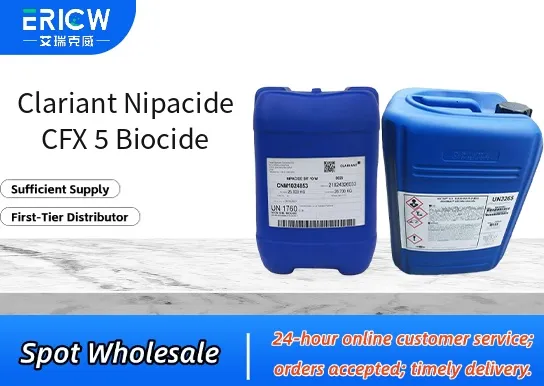
Broad-spectrum efficacy against bacteria, fungi, and algae in industrial water systems.
Low-toxicity formulation compliant with major global regulatory frameworks including EU BPR and US EPA guidelines.
Excellent stability across a wide pH range (pH 4–10) and in the presence of common water treatment additives.
Non-oxidizing chemistry that avoids corrosion risks associated with chlorine-based biocides.
Ready-to-use liquid concentrate requiring no pre-dilution for most dosing applications.
Cooling water systems in power generation and HVAC installations.
Process water circuits in paper & pulp manufacturing.
Recirculating water in metalworking fluid sumps and central coolant systems.
Preservation of emulsions, latexes, and aqueous polymer dispersions during storage and transport.
Control of microbial growth in industrial cleaning formulations and chemical intermediates.
| Chemical Type | Isothiazolinone-based blend (active ingredients: 2-methylisothiazolinone and 5-chloro-2-methylisothiazolinone) |
| Product Form | Liquid concentrate |
| Appearance | Pale yellow to amber clear liquid |
| pH (1% aqueous solution) | 3.5 – 5.0 |
| Density (20 °C) | 1.08 – 1.12 g/cm³ |
| Solubility | Completely miscible with water |
| Primary Applications | Industrial water treatment, preservation of water-based formulations |
| Storage Stability | ≥24 months at 5–25 °C in original sealed container |
Q1: What is the primary mode of action of Nipacide CFX 5 Biocide?
A: Nipacide CFX 5 Biocide functions primarily through disruption of microbial cell membranes and interference with essential metabolic processes, delivering broad-spectrum efficacy against bacteria, yeasts, and molds in industrial formulations.
Q2: In which types of industrial systems is Nipacide CFX 5 typically used?
A: It is commonly applied in water-based industrial products such as metalworking fluids, latex paints, adhesives, coatings, and construction chemicals—where long-term preservation against microbial spoilage is required during storage and use.
Q3: Is Nipacide CFX 5 compatible with common formulation ingredients?
A: Yes, it demonstrates good compatibility with a wide range of surfactants, thickeners, pigments, and other typical additives found in aqueous industrial systems. Compatibility should always be verified under actual formulation conditions.
Q4: How should Nipacide CFX 5 be dosed in a formulation?
A: Dosage depends on formulation requirements, challenge level, and regulatory context, but it is typically used at low concentrations—generally ranging from 0.1% to 2% by weight—added during the final stages of manufacturing under controlled pH and temperature conditions.
Q5: Does Nipacide CFX 5 require special handling or stability considerations?
A: It should be stored in its original sealed container at moderate temperatures and protected from prolonged exposure to strong oxidizing agents or highly alkaline environments. Stability in end-use formulations is generally good when pH remains within the recommended range (approximately 4–10).
Contact With Us:
E-mail: wangxingqiang@ericwchem.com
Have a Questions? Call Us:
Add:
Building A1, Jiete Industrial Park, Huangpu District, Guangzhou City, Guangdong Province, China