English
 Español
 tiếng việt
 русский
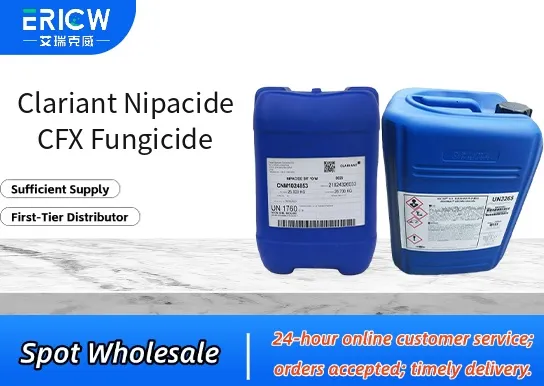
Broad-spectrum fungicidal activity against common spoilage microorganisms including molds, yeasts, and bacteria.
Non-oxidizing chemistry offering excellent stability in acidic to neutral pH ranges (pH 3–7.5).
Low volatility and minimal odor, supporting safe handling in industrial processing environments.
Compatible with a wide range of water-based formulations, including paints, coatings, adhesives, and polymer emulsions.
Effective at low use concentrations, delivering cost-efficient preservation without compromising product performance.
Water-based architectural and industrial paints and coatings.
Latex and acrylic emulsion systems for construction and decorative applications.
Adhesives and sealants used in wood, paper, and packaging industries.
Textile and nonwoven finishing formulations requiring long-term microbial resistance.
Printing inks and pigment dispersions susceptible to fungal degradation during storage.
| Chemical Type | Isothiazolinone-based biocide blend |
| Product Form | Liquid concentrate |
| Appearance | Pale yellow to amber clear liquid |
| Primary Applications | Preservation of water-based industrial formulations |
| Key Features | Broad-spectrum, non-oxidizing, pH-stable |
| Benefits | Extended shelf life, compatibility with common surfactants and polymers |
| Solubility | Miscible with water and many polar organic solvents |
| Storage Stability | ≥24 months at 5–25°C in original sealed container |
Q1: What is the primary mode of action of Nipacide CFX?
A: Nipacide CFX functions as a broad-spectrum fungicide through inhibition of fungal cell wall synthesis and disruption of membrane integrity, providing effective control against common spoilage fungi in water-based industrial systems.
Q2: In which types of industrial formulations is Nipacide CFX typically used?
A: It is widely applied in water-miscible metalworking fluids, latex paints and coatings, adhesives, sealants, and other aqueous polymer systems where long-term protection against fungal growth during storage and use is required.
Q3: Is Nipacide CFX compatible with common biocides used for bacterial control?
A: Yes, Nipacide CFX demonstrates good compatibility with many isothiazolinone- and formaldehyde-releasing biocides, enabling synergistic broad-spectrum preservation strategies—compatibility testing under actual formulation conditions is recommended prior to full-scale implementation.
Q4: How should Nipacide CFX be incorporated into a formulation?
A: It is supplied as a stable aqueous dispersion and is generally added during the final stages of manufacturing, with gentle mixing to ensure uniform distribution; dosage depends on formulation requirements but is typically used at low concentrations to achieve effective antifungal performance.
Q5: Does Nipacide CFX contribute to odor or discoloration in finished products?
A: When used within recommended dosage ranges, Nipacide CFX exhibits minimal impact on product odor and does not cause yellowing or staining in most polymer and coating systems.
Contact With Us:
E-mail: wangxingqiang@ericwchem.com
Have a Questions? Call Us:
Add:
Building A1, Jiete Industrial Park, Huangpu District, Guangzhou City, Guangdong Province, China