English
 Español
 tiếng việt
 русский
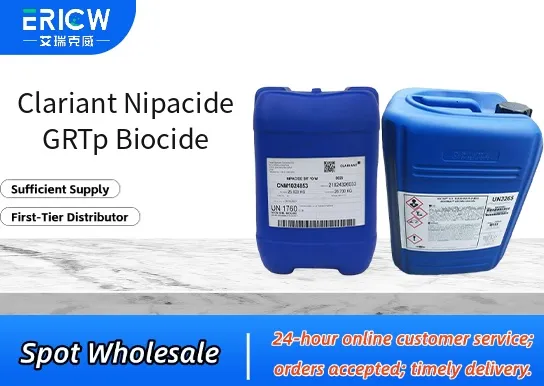
Broad-spectrum antimicrobial efficacy against bacteria, fungi, and algae.
Low-toxicity formulation compliant with major global regulatory frameworks including EU BPR and US EPA guidelines.
Excellent stability in water-based systems across a wide pH range (pH 4–10).
Non-oxidizing chemistry, minimizing corrosion risk to metal components and compatibility with common polymers.
Ready-to-use liquid concentrate requiring no activation or dilution prior to dosing.
Industrial cooling water systems for power generation and manufacturing facilities.
Process water circuits in pulp and paper mills.
Recirculating water systems in HVAC chillers and heat exchangers.
Water-based metalworking fluids and hydraulic fluids.
Preservation of water-containing coatings, adhesives, and construction chemicals.
| Chemical Type | Isothiazolinone-based biocide blend |
| Product Form | Liquid concentrate |
| Appearance | Clear, pale yellow to amber liquid |
| Primary Applications | Industrial water treatment, metalworking fluids, coatings & adhesives |
| Key Features | Broad-spectrum, non-oxidizing, pH-stable, low volatility |
| Benefits | Reduced microbial fouling, extended fluid life, minimal impact on system materials |
| Storage Conditions | Store in original container at 5–30 °C, protect from freezing and direct sunlight |
| Shelf Life | 24 months under recommended storage conditions |
Q1: What is the primary mode of action of Nipacide GRTp Biocide?
A: Nipacide GRTp Biocide functions primarily through disruption of microbial cell membranes and interference with essential metabolic processes, delivering broad-spectrum efficacy against bacteria, yeasts, and molds in water-based industrial formulations.
Q2: In which types of industrial systems is Nipacide GRTp typically used?
A: It is commonly applied in water-based metalworking fluids, industrial cleaning solutions, process water systems, and waterborne coatings where long-term microbiological control is required under moderate to challenging pH and temperature conditions.
Q3: Is Nipacide GRTp compatible with common surfactants and additives found in industrial formulations?
A: Yes, Nipacide GRTp demonstrates good compatibility with a wide range of anionic, nonionic, and cationic surfactants, as well as typical corrosion inhibitors, defoamers, and thickeners—though compatibility testing under actual formulation conditions is recommended prior to full-scale implementation.
Q4: How should Nipacide GRTp be dosed in a formulation?
A: Dosage depends on formulation requirements, challenge level, and system conditions; it is typically used at low concentrations, generally ranging from 0.1% to 2% by weight, with initial treatment followed by periodic maintenance dosing based on microbial monitoring.
Q5: Does Nipacide GRTp require special handling or storage conditions?
A: It should be stored in its original sealed container in a cool, dry place away from direct sunlight and strong oxidizing agents; standard industrial chemical handling precautions apply, including appropriate personal protective equipment during handling and dilution.
Contact With Us:
E-mail: wangxingqiang@ericwchem.com
Have a Questions? Call Us:
Add:
Building A1, Jiete Industrial Park, Huangpu District, Guangzhou City, Guangdong Province, China