English
 Español
 tiếng việt
 русский
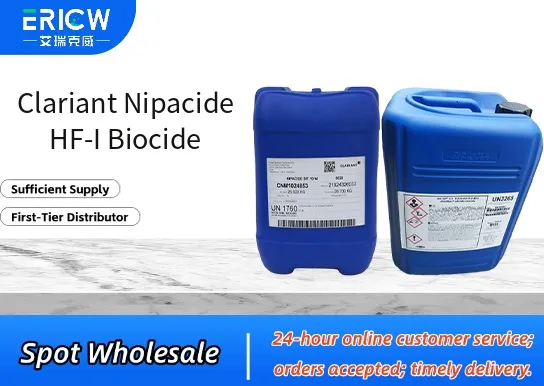
Highly effective broad-spectrum biocide against bacteria, fungi, and algae in water-based industrial systems.
Low-toxicity formulation compliant with major global regulatory frameworks including EU BPR and US EPA guidelines.
Excellent stability across a wide pH range (pH 4–10) and compatibility with common water treatment additives.
Non-oxidizing mode of action prevents corrosion and minimizes impact on system metallurgy.
Ready-to-use liquid concentrate requiring no activation or complex dosing protocols.
Cooling water systems in HVAC and industrial heat exchange installations.
Process water circuits in paper & board manufacturing facilities.
Recirculating water in metalworking fluid sumps and central coolant systems.
Preservation of emulsions and water-based coatings during storage and transport.
Control of microbial growth in closed-loop geothermal and district heating systems.
| Chemical Type | Isothiazolinone-based blend (primarily 2-methyl-4-isothiazolin-3-one and 5-chloro-2-methyl-4-isothiazolin-3-one) |
| Product Form | Liquid concentrate |
| Appearance | Pale yellow to amber clear liquid |
| pH (1% aqueous solution) | 3.0 – 5.0 |
| Density (at 20 °C) | 1.08 – 1.12 g/cm³ |
| Solubility | Completely miscible with water |
| Primary Applications | Industrial water treatment, metalworking fluids, papermaking, coatings & adhesives |
| Key Features | Broad-spectrum efficacy, low volatility, non-oxidizing, low environmental persistence |
Q1: What is the primary mode of action of Nipacide HF-I Biocide?
A: Nipacide HF-I Biocide functions primarily through the controlled release of formaldehyde, which disrupts essential cellular processes in microorganisms—including protein denaturation and nucleic acid cross-linking—leading to effective broad-spectrum antimicrobial activity against bacteria, yeasts, and molds.
Q2: In which types of industrial formulations is Nipacide HF-I Biocide commonly used?
A: It is widely applied in water-based industrial products such as metalworking fluids, latex paints, adhesives, sealants, construction chemicals, and cleaning concentrates—particularly where long-term preservation against microbial spoilage is required under varying pH and temperature conditions.
Q3: How stable is Nipacide HF-I Biocide in formulated systems?
A: Nipacide HF-I Biocide exhibits good hydrolytic stability in neutral to mildly alkaline aqueous systems and maintains consistent biocidal performance over extended storage periods when incorporated correctly—though stability may decrease under strongly acidic conditions or at elevated temperatures over time.
Q4: Is Nipacide HF-I Biocide compatible with common formulation ingredients?
A: Yes—it demonstrates broad compatibility with surfactants, thickeners, corrosion inhibitors, and other typical additives found in industrial formulations; however, compatibility testing under actual use conditions is recommended due to potential interactions with strong reducing agents or highly reactive amines.
Q5: What safety and handling considerations apply to Nipacide HF-I Biocide?
A: As a formaldehyde-releasing biocide, it requires appropriate occupational hygiene measures—including adequate ventilation, skin protection, and eye protection during handling—to minimize exposure; users should consult the Safety Data Sheet (SDS) for detailed toxicological information and regulatory guidance applicable to their region.
Contact With Us:
E-mail: wangxingqiang@ericwchem.com
Have a Questions? Call Us:
Add:
Building A1, Jiete Industrial Park, Huangpu District, Guangzhou City, Guangdong Province, China