English
 Español
 tiếng việt
 русский
Broad-spectrum antimicrobial activity against bacteria, fungi, and algae.
Stable in water-based systems across a wide pH range (pH 4–10).
Low volatility and excellent compatibility with common industrial surfactants and polymers.
Effective at low use concentrations, supporting sustainable dosing strategies.
Non-oxidizing mode of action, minimizing corrosion risk in metal-containing formulations.
Preservation of water-based paints and coatings.
Protection of architectural and industrial adhesives and sealants.
Microbial control in construction chemicals including cementitious slurries and grouts.
Stabilization of pigment dispersions and latex emulsions.
Biostatic protection in non-ionic and anionic surfactant-rich systems.
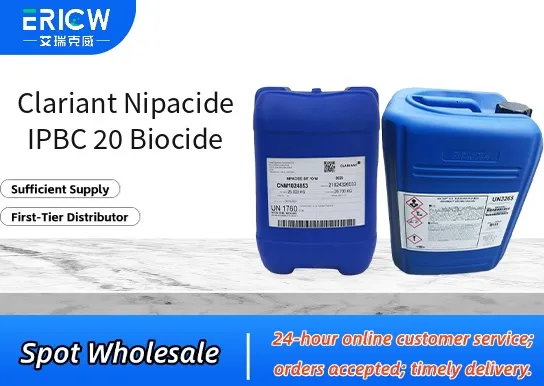
| Chemical Type | Iodopropynyl butylcarbamate (IPBC) |
| Product Form | 20% active ingredient in propylene glycol |
| Appearance | Clear, pale yellow to amber liquid |
| Active Content | 20.0 ± 1.0 wt% |
| Density (20 °C) | 1.03–1.07 g/cm³ |
| Solubility | Completely miscible with water and common organic solvents |
| Storage Stability | ≥ 24 months at 5–25 °C in original sealed container |
| Primary Applications | Paints, coatings, adhesives, construction chemicals, and polymer dispersions |
Q1: What is the primary mode of action of Nipacide IPBC 20?
A: Nipacide IPBC 20 acts primarily through inhibition of cellular respiration and disruption of membrane integrity in bacteria and fungi, delivering broad-spectrum antimicrobial activity against both Gram-positive and Gram-negative microorganisms as well as yeasts and molds.
Q2: In which types of industrial formulations is Nipacide IPBC 20 commonly used?
A: It is widely applied in water-based industrial products such as metalworking fluids, latex paints and coatings, adhesives, construction chemicals, and polymer emulsions—particularly where long-term preservation against microbial spoilage is required under neutral to mildly alkaline conditions.
Q3: Is Nipacide IPBC 20 compatible with common preservative systems?
A: Yes, it shows good compatibility with many conventional biocides—including isothiazolinones and formaldehyde releasers—and is often used in synergistic combinations to broaden the antimicrobial spectrum and enhance stability in complex formulations.
Q4: How should Nipacide IPBC 20 be stored to maintain its efficacy?
A: Store in original sealed containers at temperatures between 5 °C and 30 °C, protected from direct sunlight and moisture. Avoid freezing, and ensure containers remain tightly closed when not in use to prevent degradation and contamination.
Q5: What safety considerations apply during handling?
A: As with all industrial biocides, appropriate personal protective equipment—including gloves, safety goggles, and respiratory protection if aerosols or mists are generated—should be used. Always consult the Safety Data Sheet (SDS) for detailed hazard information, first-aid measures, and safe handling procedures before use.
Contact With Us:
E-mail: wangxingqiang@ericwchem.com
Have a Questions? Call Us:
Add:
Building A1, Jiete Industrial Park, Huangpu District, Guangzhou City, Guangdong Province, China