English
 Español
 tiếng việt
 русский
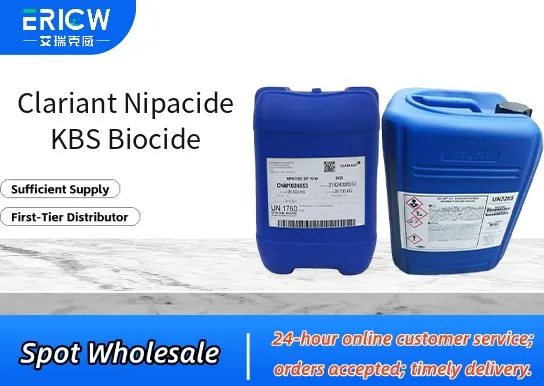
Broad-spectrum efficacy against bacteria, fungi, and algae in industrial water systems.
Low-toxicity formulation compliant with major global regulatory frameworks including EU BPR and US EPA guidelines.
Excellent stability across a wide pH range (pH 4–10) and resistance to hydrolysis under typical operating conditions.
Non-oxidizing chemistry that minimizes corrosion risk to carbon steel, stainless steel, and copper alloys.
Compatible with common scale inhibitors, dispersants, and other water treatment additives without performance loss.
Cooling water systems in power generation and HVAC installations.
Process water circuits in pulp and paper manufacturing.
Recirculating water loops in chemical and petrochemical plants.
Make-up water treatment for closed-loop industrial cooling towers.
Preservation of metalworking fluids and emulsions during storage and circulation.
| Chemical Type | Isothiazolinone-based biocide blend (active ingredients: 5-chloro-2-methyl-4-isothiazolin-3-one and 2-methyl-4-isothiazolin-3-one) |
| Product Form | Aqueous solution |
| Appearance | Clear, light yellow liquid |
| pH (1% aqueous solution) | 3.0 – 5.0 |
| Density (20 °C) | 1.02 – 1.06 g/cm³ |
| Solubility | Completely miscible with water in all proportions |
| Storage Stability | ≥ 24 months at 5–30 °C in original sealed container |
| Primary Applications | Industrial water treatment, metalworking fluid preservation, process water disinfection |
Q1: What is the primary mode of action of Nipacide KBS Biocide?
A: Nipacide KBS Biocide functions primarily through membrane disruption and interference with essential cellular processes in microorganisms, delivering broad-spectrum efficacy against bacteria, yeasts, and molds.
Q2: In which types of industrial formulations is Nipacide KBS typically used?
A: It is commonly incorporated into water-based industrial products such as metalworking fluids, latex paints, adhesives, construction chemicals, and cleaning concentrates—particularly where long-term preservation and compatibility with anionic and nonionic systems are required.
Q3: Is Nipacide KBS Biocide compatible with common surfactants and thickeners?
A: Yes, it demonstrates good compatibility with a wide range of formulation ingredients including anionic, nonionic, and amphoteric surfactants, as well as common rheology modifiers like associative thickeners and cellulose derivatives.
Q4: How should Nipacide KBS be added to a formulation for optimal performance?
A: It is recommended to add Nipacide KBS during the cool-down phase or at ambient temperature after emulsification or homogenization is complete, ensuring uniform dispersion without thermal degradation.
Q5: What safety and handling precautions should be observed when working with this biocide?
A: As with all industrial biocides, appropriate personal protective equipment—including gloves and eye protection—should be worn during handling. Always consult the Safety Data Sheet (SDS) for detailed toxicological information, first-aid measures, and safe storage conditions.
Contact With Us:
E-mail: wangxingqiang@ericwchem.com
Have a Questions? Call Us:
Add:
Building A1, Jiete Industrial Park, Huangpu District, Guangzhou City, Guangdong Province, China