English
 Español
 tiếng việt
 русский
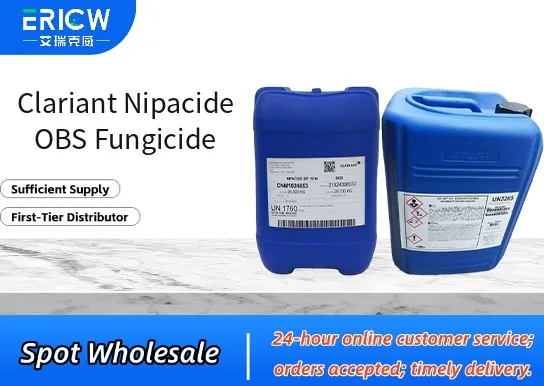
Highly effective broad-spectrum fungicide based on ortho-phenylphenol (OPP) sodium salt.
Excellent compatibility with water-based industrial formulations including paints, adhesives, and coatings.
Low volatility and favorable toxicological profile suitable for use in low-VOC and regulated environments.
Stable across a wide pH range (pH 4–10), ensuring consistent performance in diverse formulation systems.
Non-staining and odor-controlled formulation, supporting aesthetic and sensory requirements in end applications.
Water-based architectural and industrial paints and coatings.
Adhesives and sealants for construction and woodworking.
Textile and leather finishing treatments requiring mildew resistance.
Printing inks and paper coatings for moisture-prone environments.
Emulsion polymer systems and synthetic latex formulations.
| Chemical Type | Sodium salt of ortho-phenylphenol (OPP) |
| Product Form | Aqueous solution |
| Appearance | Clear to slightly hazy, light yellow liquid |
| Active Content | Approx. 15% w/w sodium ortho-phenylphenate |
| pH (1% aqueous solution) | 9.0–10.5 |
| Density (20°C) | 1.05–1.10 g/cm³ |
| Solubility | Miscible with water; compatible with common polar solvents |
| Storage Stability | ≥12 months at 5–30°C in original sealed container |
Q1: What is the primary mode of action of Nipacide OBS?
A: Nipacide OBS functions as a broad-spectrum fungicide through inhibition of fungal cell wall synthesis and disruption of membrane integrity, delivering effective control against common spoilage fungi in water-based industrial systems.
Q2: In which types of formulations is Nipacide OBS commonly used?
A: It is widely applied in aqueous-based industrial products such as metalworking fluids, latex paints, adhesives, paper coatings, and construction chemicals—where long-term microbial stability and compatibility with anionic and nonionic surfactants are required.
Q3: Is Nipacide OBS compatible with other biocides or preservatives?
A: Yes, Nipacide OBS generally exhibits good compatibility with common isothiazolinones, formaldehyde releasers, and benzisothiazolinone-based biocides, enabling synergistic blends for enhanced spectrum and performance—compatibility testing under actual formulation conditions is recommended.
Q4: How should Nipacide OBS be dosed in a typical application?
A: Dosage depends on formulation requirements, challenge level, and regulatory context, but it is typically used at low concentrations—generally ranging from 0.1% to 2% by weight in the final product—to achieve effective fungal control without compromising system stability.
Q5: Does Nipacide OBS require pH adjustment for optimal performance?
A: Nipacide OBS demonstrates stable performance across a broad pH range (approximately pH 4–10), making it suitable for use in both acidic and alkaline systems without mandatory pH adjustment—however, extreme pH values may influence long-term efficacy and shelf-life.
Contact With Us:
E-mail: wangxingqiang@ericwchem.com
Have a Questions? Call Us:
Add:
Building A1, Jiete Industrial Park, Huangpu District, Guangzhou City, Guangdong Province, China