English
 Español
 tiếng việt
 русский
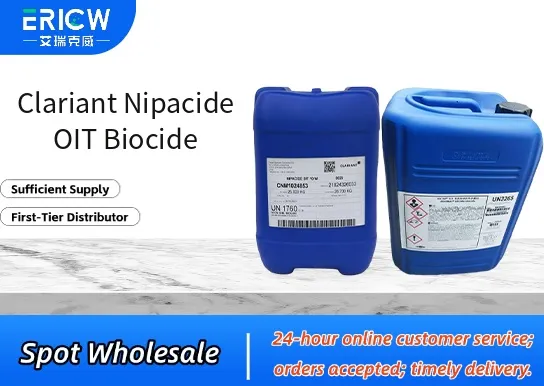
Highly effective broad-spectrum biocide against bacteria, fungi, and algae.
Excellent thermal and pH stability across typical industrial process conditions.
Low volatility and minimal odor, supporting safer handling and reduced workplace exposure.
Compatible with a wide range of water-based formulations including paints, coatings, and adhesives.
Non-oxidizing mode of action, minimizing risk of corrosion in metal-containing systems.
Preservation of architectural and industrial waterborne paints and coatings.
Protection of latex emulsions and polymer dispersions during storage and application.
Biocontrol in paper mill white water systems and coating color formulations.
Maintenance of microbiological stability in construction chemicals such as grouts and tile adhesives.
Stabilization of aqueous pigment dispersions and ink vehicles.
| Chemical Type | Organic isothiazolinone derivative (OIT: 2-n-octyl-4-isothiazolin-3-one) |
| Product Form | Liquid concentrate |
| Appearance | Clear to slightly hazy, pale yellow liquid |
| Active Content | 10.0 ± 0.5% w/w OIT |
| pH (1% aqueous solution) | 6.0 – 8.0 |
| Density (20°C) | 1.02 – 1.06 g/cm³ |
| Solubility | Miscible with water and common organic solvents (e.g., glycol ethers, alcohols) |
| Storage Stability | ≥24 months at 5–25°C in original sealed container |
Q1: What is the primary mode of action of Nipacide OIT Biocide?
A: Nipacide OIT Biocide functions primarily through inhibition of microbial cell wall synthesis and disruption of essential enzymatic activity in bacteria, fungi, and algae. Its broad-spectrum efficacy stems from the biocidal properties of octylisothiazolinone (OIT), which interferes with key metabolic pathways in susceptible microorganisms.
Q2: In which types of industrial formulations is Nipacide OIT Biocide commonly used?
A: It is widely employed in water-based industrial systems including metalworking fluids, latex paints and coatings, adhesives, sealants, construction slurries, and polymer emulsions—where long-term protection against microbial spoilage and biofilm formation is required during storage and use.
Q3: How stable is Nipacide OIT Biocide under varying pH and temperature conditions?
A: Nipacide OIT Biocide demonstrates good stability across a typical industrial formulation pH range of approximately 4–10 and remains effective under standard ambient and moderately elevated processing temperatures. Performance may diminish under strongly alkaline conditions or prolonged exposure to high heat (>60 °C) over extended periods.
Q4: Is Nipacide OIT Biocide compatible with common surfactants and thickeners used in aqueous systems?
A: Yes, it exhibits broad compatibility with nonionic and anionic surfactants, cellulose ethers, associative thickeners, and many common co-biocide synergists. Compatibility should always be verified in the final formulation due to potential interactions with highly cationic or oxidizing components.
Q5: What is the typical dosage range for effective preservation with Nipacide OIT Biocide?
A: Dosage depends on formulation complexity, microbial challenge level, and regulatory requirements, but it is typically used at low concentrations—generally ranging from 0.1% to 2% by weight in the final product. Optimal concentration must be determined empirically through preservative efficacy testing (PET) under representative conditions.
Contact With Us:
E-mail: wangxingqiang@ericwchem.com
Have a Questions? Call Us:
Add:
Building A1, Jiete Industrial Park, Huangpu District, Guangzhou City, Guangdong Province, China