English
 Español
 tiếng việt
 русский
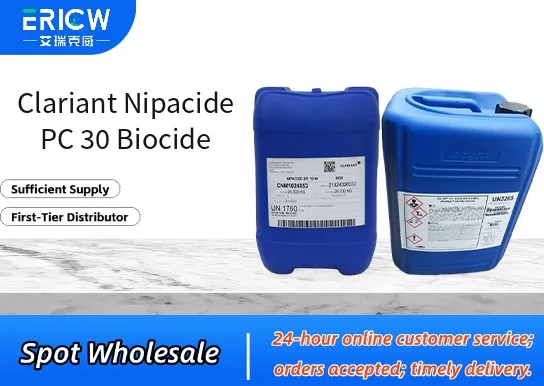
Broad-spectrum efficacy against bacteria, fungi, and algae in water-based systems.
Stable across a wide pH range (pH 4–10), ensuring compatibility with diverse formulations.
Low volatility and minimal odor, enhancing workplace safety and user acceptance.
Compatible with common surfactants, thickeners, and other formulation ingredients.
Non-oxidizing mode of action, reducing corrosion risk to system components.
Preservation of water-based industrial coatings and paints.
Microbial control in metalworking fluids and cutting oils.
Protection of adhesives, sealants, and construction chemicals during storage and use.
Stabilization of pigment dispersions and architectural latex emulsions.
Biostatic protection in non-ionic and anionic detergent systems.
| Chemical Type | Isothiazolinone-based biocide blend |
| Product Form | Liquid concentrate |
| Appearance | Clear, pale yellow liquid |
| pH (1% aqueous solution) | 6.0–8.0 |
| Density (20 °C) | 1.05–1.10 g/cm³ |
| Solubility | Miscible with water and most polar organic solvents |
| Primary Applications | Industrial preservation, metalworking fluids, coatings, adhesives |
| Key Features | Broad-spectrum, non-oxidizing, pH-stable, low-odor |
Q1: What is the primary mode of action of Nipacide PC 30?
A: Nipacide PC 30 is a broad-spectrum preservative based on isothiazolinone chemistry, which disrupts essential cellular functions in microorganisms—including membrane integrity and energy metabolism—leading to rapid biocidal activity against bacteria, yeasts, and molds.
Q2: In which types of industrial formulations is Nipacide PC 30 commonly used?
A: It is widely applied in water-based industrial products such as metalworking fluids, latex paints and coatings, adhesives, construction chemicals, and cleaning concentrates—where long-term microbial control is required under challenging pH and temperature conditions.
Q3: Is Nipacide PC 30 compatible with common formulation ingredients?
A: Yes, it demonstrates good compatibility with anionic, nonionic, and amphoteric surfactants, thickeners, and many common co-biocide systems. However, compatibility should always be verified experimentally in the final formulation due to potential interactions with reducing agents or highly reactive components.
Q4: How should Nipacide PC 30 be dosed in formulations?
A: Dosage depends on the specific formulation’s microbiological challenge, storage conditions, and regulatory requirements. It is typically used at low concentrations, generally ranging from 0.1% to 2% by weight, with optimization recommended through preservative efficacy testing (PET) under relevant industry standards.
Q5: What safety and handling precautions should be observed?
A: As with all biocidal actives, appropriate personal protective equipment (PPE) such as gloves and eye protection should be worn during handling. The product may cause skin and eye irritation, and inhalation of mists or vapors should be avoided. Refer to the Safety Data Sheet (SDS) for comprehensive hazard information and safe use guidance.
Contact With Us:
E-mail: wangxingqiang@ericwchem.com
Have a Questions? Call Us:
Add:
Building A1, Jiete Industrial Park, Huangpu District, Guangzhou City, Guangdong Province, China