English
 Español
 tiếng việt
 русский
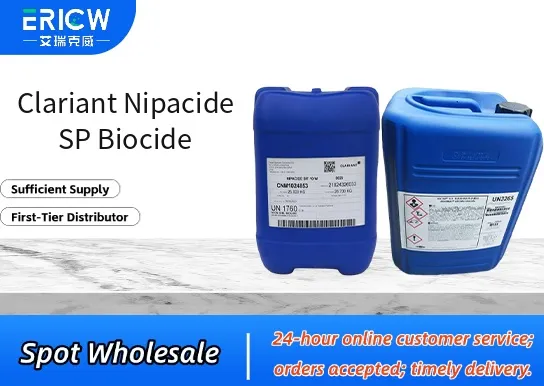
Highly effective broad-spectrum biocide against bacteria, fungi, and algae in industrial water systems.
Stable performance across a wide pH range (pH 4–9) and tolerant to common water treatment additives.
Low foaming formulation suitable for high-shear and recirculating cooling water applications.
Compatible with oxidizing biocides for synergistic control in integrated microbiological management programs.
Non-volatile and non-corrosive to carbon steel, copper, and stainless-steel alloys under recommended dosage.
Cooling water systems in power generation and HVAC installations.
Process water circuits in paper & pulp mills and textile manufacturing facilities.
Recirculating water systems in food and beverage processing plants.
Make-up water and sidestream treatment in industrial closed-loop systems.
Preservation of emulsions and water-based formulations during storage and transport.
| Chemical Type | Isothiazolinone-based blend (primarily 2-methyl-4-isothiazolin-3-one and 5-chloro-2-methyl-4-isothiazolin-3-one) |
| Product Form | Aqueous solution |
| Appearance | Clear, pale yellow liquid |
| pH (1% aqueous solution) | 3.0 – 5.0 |
| Density (at 20 °C) | 1.08 – 1.12 g/cm³ |
| Solubility in Water | Completely miscible |
| Primary Applications | Industrial cooling water, process water, and preservative for water-based fluids |
| Key Features | Broad-spectrum efficacy, low toxicity profile, thermal stability up to 60 °C |
Q1: What is the primary mode of action of Nipacide SP Biocide?
A: Nipacide SP Biocide functions as a broad-spectrum preservative through membrane disruption and interference with essential microbial metabolic processes, effectively controlling bacteria, yeasts, and molds in water-based systems.
Q2: In which types of industrial formulations is Nipacide SP commonly used?
A: It is widely applied in water-based coatings, adhesives, construction chemicals, metalworking fluids, and cleaning concentrates—particularly where long-term microbial stability and low-odor performance are required.
Q3: Is Nipacide SP compatible with common thickeners and surfactants?
A: Yes, Nipacide SP demonstrates good compatibility with associative and non-associative thickeners, anionic and nonionic surfactants, and most common formulation additives—though compatibility testing under actual use conditions is recommended.
Q4: How should Nipacide SP be incorporated into a formulation?
A: It is typically added during the cool-down phase or post-emulsification stage to minimize thermal degradation, and should be dispersed uniformly using mild agitation to ensure consistent preservation performance.
Q5: Does Nipacide SP require pH adjustment for optimal efficacy?
A: While Nipacide SP remains effective across a broad pH range (approximately 4–10), maximum stability and antimicrobial activity are generally observed in mildly acidic to neutral conditions; significant alkalinity may reduce its persistence over time.
Contact With Us:
E-mail: wangxingqiang@ericwchem.com
Have a Questions? Call Us:
Add:
Building A1, Jiete Industrial Park, Huangpu District, Guangzhou City, Guangdong Province, China