English
 Español
 tiếng việt
 русский
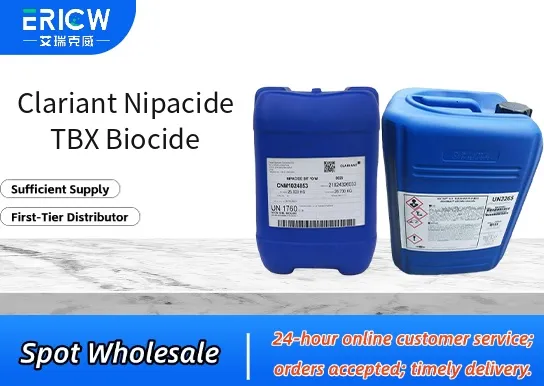
Highly effective broad-spectrum biocide against bacteria, fungi, and algae.
Excellent stability in water-based systems across a wide pH range (pH 4–10).
Low toxicity profile with favorable environmental and regulatory acceptance (e.g., compliant with EU BPR where applicable).
Compatible with common surfactants, thickeners, and other formulation ingredients.
Non-oxidizing mode of action, minimizing corrosion risk to metal components.
Preservation of architectural coatings and decorative paints.
Microbial control in industrial water-based adhesives and sealants.
Protection of construction chemicals including grouts, mortars, and cementitious slurries.
Stabilization of pigment dispersions and rheology-modified formulations.
Use in maintenance-free liquid colorants and tinting systems.
| Chemical Type | Isothiazolinone-based biocide (active: 1,2-benzisothiazol-3(2H)-one + 2-methyl-4-isothiazolin-3-one) |
| Product Form | Aqueous solution |
| Appearance | Clear, pale yellow liquid |
| pH (1% aqueous solution) | 3.5 – 5.5 |
| Density (20 °C) | Approx. 1.08 – 1.12 g/cm³ |
| Solubility | Miscible with water; compatible with most polar organic solvents |
| Storage Stability | ≥12 months at 5–25 °C in original sealed container |
| Primary Applications | Pigmented coatings, adhesives, construction chemicals, and industrial dispersions |
Q1: What is the primary mode of action of Nipacide TBX?
A: Nipacide TBX functions as a broad-spectrum biocide through disruption of microbial cell membranes and interference with essential metabolic processes, leading to rapid inactivation of bacteria, yeasts, and molds.
Q2: In which types of industrial formulations is Nipacide TBX commonly used?
A: It is widely applied in water-based industrial products such as metalworking fluids, latex paints, adhesives, construction chemicals, and cleaning concentrates—particularly where long-term preservation against microbial spoilage is required.
Q3: Is Nipacide TBX compatible with common anionic, nonionic, and cationic surfactants?
A: Yes, Nipacide TBX demonstrates good compatibility across a broad range of surfactant classes and is generally stable in formulations with pH values between 5 and 10.
Q4: How should Nipacide TBX be incorporated into a formulation?
A: It is typically added during the cool-down phase or post-emulsification stage to avoid thermal degradation. Dosage depends on formulation requirements but generally ranges from 0.1% to 2% by weight, with optimal levels determined through challenge testing.
Q5: Does Nipacide TBX require special handling or storage conditions?
A: Store in original sealed containers at temperatures between 5 °C and 30 °C, away from direct sunlight and strong oxidizing agents. Standard industrial hygiene practices—including gloves and eye protection—are recommended during handling.
Contact With Us:
E-mail: wangxingqiang@ericwchem.com
Have a Questions? Call Us:
Add:
Building A1, Jiete Industrial Park, Huangpu District, Guangzhou City, Guangdong Province, China