English
 Español
 tiếng việt
 русский
Broad-spectrum fungicidal activity against key spoilage microorganisms including molds, yeasts, and bacteria.
Stable and effective across a wide pH range (pH 3–10), ensuring compatibility with diverse formulation matrices.
Low volatility and excellent thermal stability, supporting use in high-temperature processing environments.
Non-oxidizing chemistry, minimizing risk of corrosion or degradation to sensitive substrates and packaging materials.
Compatible with common industrial preservative systems, enabling synergistic combinations for enhanced preservation efficacy.
Water-based paints and coatings for architectural and industrial applications.
Emulsion polymer systems, including acrylic and styrene-butadiene latexes.
Adhesives and sealants, particularly those prone to microbial contamination during storage.
Construction chemicals such as grouts, mortars, and tile adhesives.
Industrial process water and recirculating cooling systems requiring microbiological control.
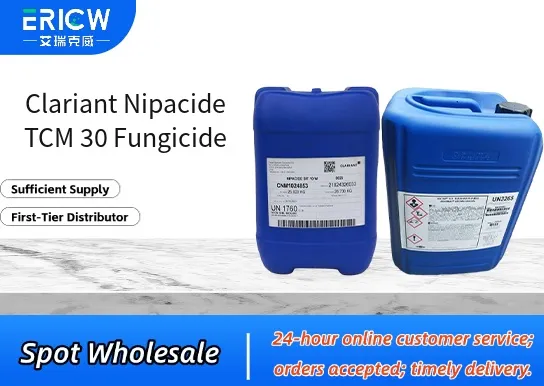
| Chemical Type | Thiocarbamate-based fungicide |
| Product Form | Free-flowing white to off-white granular powder |
| Appearance | Granular, homogeneous solid |
| Primary Applications | Preservation of water-based industrial formulations |
| Key Features | Broad-spectrum antimicrobial, non-oxidizing, pH-stable |
| Benefits | Extended shelf life, low odor, minimal impact on product performance |
| Solubility | Partially soluble in water; readily dispersible in aqueous systems |
| Storage Conditions | Store in original sealed container at 5–25 °C, protected from moisture |
Q1: What is the primary mode of action of Nipacide TCM 30?
A: Nipacide TCM 30 functions as a broad-spectrum fungicide through inhibition of fungal cell membrane synthesis, primarily targeting ergosterol biosynthesis pathways. Its active ingredient provides preventive and early curative activity against common spoilage fungi in industrial water systems and polymer formulations.
Q2: In which types of industrial applications is Nipacide TCM 30 most commonly used?
A: It is widely applied in water-based industrial systems—including metalworking fluids, latex emulsions, adhesives, coatings, and construction chemicals—where microbial stability and long-term protection against mold, yeast, and filamentous fungi are critical. It is especially valued in formulations requiring low-odor, non-volatile biocidal performance.
Q3: Is Nipacide TCM 30 compatible with common formulation ingredients such as surfactants, thickeners, and pH adjusters?
A: Yes, Nipacide TCM 30 demonstrates good compatibility with a wide range of anionic, nonionic, and amphoteric surfactants, as well as common rheology modifiers and buffering agents. Compatibility should always be verified under actual formulation conditions, particularly at elevated temperatures or extreme pH values.
Q4: How should Nipacide TCM 30 be dosed in a typical formulation?
A: Dosage depends on the specific formulation matrix, anticipated microbial challenge, and regulatory requirements for the end-use application. It is typically used at low concentrations, generally ranging from 0.1% to 2% by weight, with optimal performance achieved through early addition during manufacturing and thorough dispersion.
Q5: Does Nipacide TCM 30 offer residual protection after initial application?
A: Yes, it provides persistent antimicrobial activity due to its low volatility and favorable partitioning behavior in aqueous and semi-aqueous systems. This enables extended shelf-life stability and ongoing protection against recontamination during storage and use, provided formulation pH and ionic strength remain within recommended ranges.
Contact With Us:
E-mail: wangxingqiang@ericwchem.com
Have a Questions? Call Us:
Add:
Building A1, Jiete Industrial Park, Huangpu District, Guangzhou City, Guangdong Province, China