English
 Español
 tiếng việt
 русский
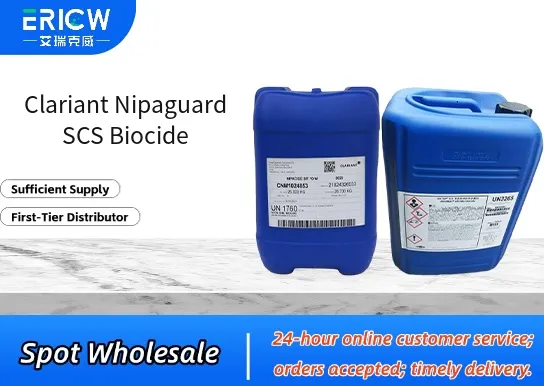
Broad-spectrum antimicrobial activity against bacteria, yeasts, and molds.
Low toxicity profile with favorable environmental and human safety characteristics.
Excellent compatibility with common water-based formulations including emulsions and dispersions.
pH-stable performance across a wide range (pH 3–10), ensuring reliability in diverse process conditions.
Non-volatile and non-oxidizing, minimizing odor impact and material degradation risks.
Preservation of water-based industrial coatings and paints.
Microbial control in architectural and decorative latex paints.
Protection of adhesives and sealants during storage and application.
Stabilization of construction chemicals such as grouts, mortars, and tile adhesives.
Preservation of polymer dispersions and aqueous pigment preparations.
| Chemical Type | Blend of isothiazolinones and synergistic preservatives |
| Product Form | Liquid concentrate |
| Appearance | Clear to slightly hazy, pale yellow liquid |
| Primary Applications | Preservative for water-based industrial and architectural formulations |
| Key Features | Broad-spectrum efficacy, low volatility, pH stability |
| Benefits | Extended shelf life, reduced risk of spoilage, compliance with major regulatory frameworks |
| Recommended Use Level | 0.05–0.20% w/w (based on total formulation) |
| Storage Conditions | Store in original container at 5–30°C; protect from freezing and direct sunlight |
Q1: What is the primary mode of action of Nipaguard SCS Biocide?
A: Nipaguard SCS Biocide functions primarily through broad-spectrum antimicrobial activity against bacteria, yeasts, and molds. Its active ingredients disrupt microbial cell membranes and interfere with essential metabolic processes, leading to rapid and effective control in aqueous systems.
Q2: In which types of industrial formulations is Nipaguard SCS Biocide commonly used?
A: It is widely applied in water-based industrial products such as metalworking fluids, latex paints and coatings, adhesives, construction chemicals, and cleaning concentrates—particularly where long-term preservation and resistance to microbial degradation are critical during storage and use.
Q3: Is Nipaguard SCS Biocide compatible with common surfactants and thickeners?
A: Yes, Nipaguard SCS Biocide demonstrates good compatibility with a wide range of anionic, nonionic, and amphoteric surfactants, as well as typical rheology modifiers including cellulose ethers and associative thickeners—making it suitable for complex, multi-component formulations.
Q4: How should Nipaguard SCS Biocide be incorporated into a formulation?
A: It is typically added during the cool-down phase or post-emulsification stage to avoid thermal degradation. Due to its liquid form and water-miscibility, it disperses readily without requiring pre-dilution—though homogeneous mixing is recommended to ensure uniform distribution and optimal performance.
Q5: Does Nipaguard SCS Biocide offer residual protection over time?
A: Yes, it provides stable, long-lasting preservative efficacy under normal storage and usage conditions. Its formulation ensures low volatility and minimal leaching, supporting consistent biostatic and biocidal activity throughout the product’s shelf life and in-service period.
Contact With Us:
E-mail: wangxingqiang@ericwchem.com
Have a Questions? Call Us:
Add:
Building A1, Jiete Industrial Park, Huangpu District, Guangzhou City, Guangdong Province, China