English
 Español
 tiếng việt
 русский
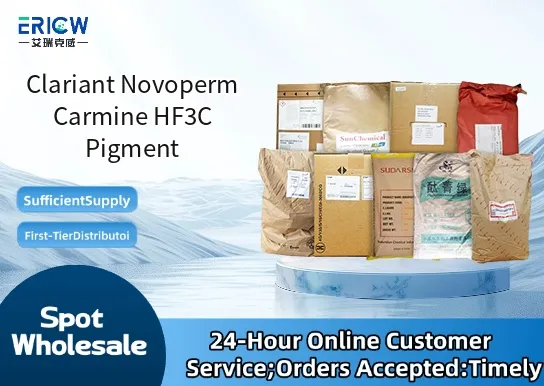
High chroma and excellent lightfastness in demanding applications.
Outstanding thermal stability suitable for high-temperature processing up to 280 °C.
Good dispersibility in both solvent-based and water-based systems.
Compliant with major global regulatory frameworks including REACH and RoHS.
Consistent batch-to-batch color reproducibility and narrow hue tolerance.
Automotive coatings requiring long-term exterior durability.
Plastic coloration for engineering thermoplastics such as polypropylene and ABS.
Industrial coil coatings exposed to UV and weathering conditions.
High-performance inks for packaging and labeling applications.
Specialty powder coatings for architectural and appliance finishes.
| Chemical Type | Quinacridone derivative |
| Product Form | Free-flowing dry powder |
| Appearance | Red-violet crystalline powder |
| Primary Applications | Coatings, plastics, inks |
| Key Features | High transparency, excellent heat stability, low migration |
| Benefits | Enhanced color strength, improved processability, reduced formulation complexity |
| Recommended Dispersing Media | Acrylic resins, polyester resins, polyolefin masterbatches |
| Storage Conditions | Store in cool, dry place; protect from moisture and direct sunlight |
Q1: What is the primary chemical class of Novoperm Carmine HF3C?
A: Novoperm Carmine HF3C is a high-performance perylene-based organic pigment, belonging to the perylene diimide family. Its molecular structure delivers exceptional lightfastness, thermal stability, and resistance to migration in demanding polymer applications.
Q2: Is this pigment suitable for food-contact plastics?
A: Novoperm Carmine HF3C is not pre-approved for direct food-contact applications under major global regulatory frameworks. Its use in food-contact materials requires full formulation-level compliance assessment by the end-user, including evaluation of extractables, migration potential, and adherence to applicable regional regulations.
Q3: Which polymers show optimal dispersion and color development with this pigment?
A: Novoperm Carmine HF3C demonstrates excellent compatibility and dispersion in engineering thermoplastics such as polypropylene (PP), polyethylene (PE), and polycarbonate (PC), particularly when processed via injection molding or extrusion. Performance in polar resins like PET may require optimized dispersing aids or masterbatch formulation.
Q4: How does HF3C differ from other Novoperm Carmine grades?
A: The 'HF3C' designation indicates a specific particle size distribution and surface treatment engineered for enhanced heat stability and reduced agglomeration during high-temperature processing—especially beneficial in thin-wall PP applications and automotive interior components where long-term color retention is critical.
Q5: What are typical dosage levels in polymer coloration?
A: Dosage depends on the target shade strength and polymer matrix, but Novoperm Carmine HF3C is typically used at low concentrations—generally ranging from 0.1% to 2% by weight in final compounds—due to its high tinting strength and efficient chromophore utilization.
Contact With Us:
E-mail: wangxingqiang@ericwchem.com
Have a Questions? Call Us:
Add:
Building A1, Jiete Industrial Park, Huangpu District, Guangzhou City, Guangdong Province, China