English
 Español
 tiếng việt
 русский
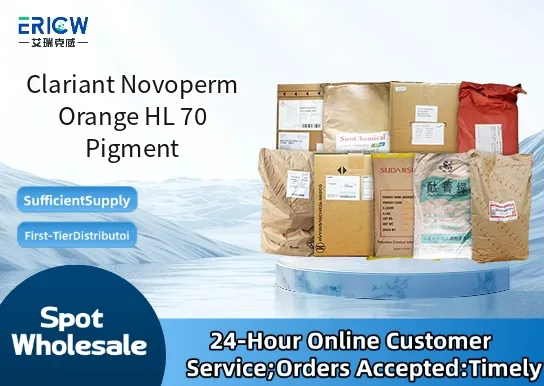
High thermal stability suitable for demanding processing conditions up to 280 °C.
Excellent lightfastness and weather resistance, meeting ISO 105-B02 and ISO 105-A02 standards.
Outstanding dispersion performance in both solvent-based and water-based systems.
Good migration resistance in PVC, polyolefins, and styrenic polymers.
Consistent batch-to-batch color strength and hue, ensured by Clariant’s stringent quality control.
Automotive interior plastics including dashboards and trim components.
Packaging films requiring FDA-compliant colorants for non-food-contact layers.
Industrial coatings for metal and plastic substrates.
Masterbatches for injection-molded consumer goods.
Engineering thermoplastics such as ABS, PC/ABS, and PP compounds.
| Chemical Type | Azo pigment (disazo condensation type) |
| Product Form | Free-flowing powder |
| Appearance | Orange-red fine powder |
| Primary Applications | Plastics, coatings, and masterbatches |
| Key Features | High heat stability, excellent dispersibility, low dusting |
| Benefits | Color consistency, minimal plate-out, broad polymer compatibility |
| Regulatory Status | Compliant with EU REACH; not listed under SVHC candidate list |
| Storage Conditions | Store in cool, dry place below 30 °C; protect from moisture and direct sunlight |
Q1: What is the primary chemical class of Novoperm Orange HL 70?
A: Novoperm Orange HL 70 is a high-performance, non-metallic organic pigment belonging to the perylene diimide derivative family, offering excellent lightfastness and thermal stability.
Q2: Is this pigment suitable for food-contact plastics?
A: Novoperm Orange HL 70 is not certified for direct food-contact applications under global regulatory frameworks. It is intended for general-purpose industrial plastics, coatings, and inks where regulatory compliance for food contact is not required.
Q3: How does HL 70 compare to standard Novoperm Orange pigments in terms of heat stability?
A: The 'HL' designation indicates enhanced heat stability—Novoperm Orange HL 70 maintains color integrity at processing temperatures up to 300 °C in polyolefins and engineering thermoplastics, making it especially suitable for demanding melt-processing applications.
Q4: What dispersion methods are recommended for optimal performance?
A: For best results, use high-shear compounding or extrusion with compatible carrier resins. Pre-dispersed concentrates are widely available and recommended to ensure uniform distribution and minimize agglomeration in final formulations.
Q5: Can Novoperm Orange HL 70 be used in water-based systems?
A: While primarily designed for solvent-based and polymer-melt applications, HL 70 can be formulated into aqueous dispersions using appropriate surfactants and stabilization technologies—however, performance in water-based coatings or inks may require application-specific optimization.
Contact With Us:
E-mail: wangxingqiang@ericwchem.com
Have a Questions? Call Us:
Add:
Building A1, Jiete Industrial Park, Huangpu District, Guangzhou City, Guangdong Province, China