English
 Español
 tiếng việt
 русский
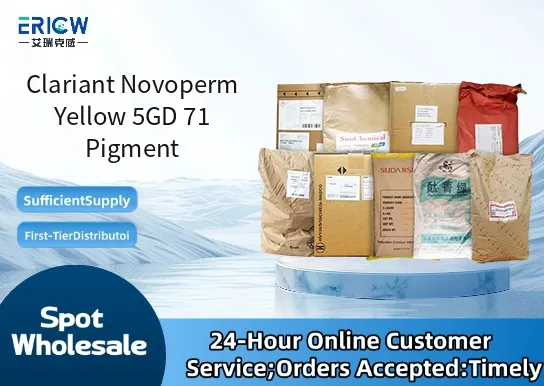
High chroma and clean greenish-yellow hue with excellent lightfastness.
Outstanding thermal stability suitable for high-temperature processing up to 280 °C.
Good dispersibility in both solvent-based and water-based systems.
Excellent resistance to migration and blooming in plastic applications.
Compliant with major global regulatory frameworks including REACH and RoHS.
Polyolefin masterbatches (PP, PE) for injection molding and blow molding.
Engineering plastics including ABS, PS, and PC.
Coatings for automotive OEM and refinish applications.
Industrial and decorative inks for flexible packaging.
High-performance PVC compounds for wire & cable and flooring.
| Chemical Type | Disazo pigment (C.I. Pigment Yellow 192) |
| Product Form | Free-flowing powder |
| Appearance | Yellow to greenish-yellow powder |
| Primary Applications | Plastics, coatings, inks |
| Key Features | Thermal stability, lightfastness, dispersion performance |
| Benefits | Color consistency, low dusting, process reliability |
| Regulatory Compliance | REACH registered, RoHS compliant, non-heavy metal |
Q1: What are the primary application areas for Novoperm Yellow 5GD 71?
A: This high-performance organic pigment is widely used in industrial coatings, automotive refinishes, and plastics—particularly where excellent lightfastness, thermal stability, and clean yellow hue are required. It is not recommended for food-contact or pharmaceutical applications without further regulatory assessment.
Q2: How does Novoperm Yellow 5GD 71 compare to other yellow pigments in terms of weather resistance?
A: Novoperm Yellow 5GD 71 offers superior outdoor durability compared to many conventional monoazo yellows, with enhanced resistance to UV radiation and atmospheric pollutants—making it suitable for demanding exterior coating systems.
Q3: Is this pigment compatible with common resin systems used in solvent-based and water-based coatings?
A: Yes, Novoperm Yellow 5GD 71 demonstrates good compatibility with a broad range of binders, including acrylics, polyesters, alkyds, and epoxy resins—both in solvent-borne and carefully formulated water-borne systems. Dispersibility may vary depending on surfactant selection and milling conditions.
Q4: What is the typical dosage range when using this pigment in plastic coloration?
A: Dosage depends on the desired shade strength and substrate transparency, but it is generally used at low concentrations—typically ranging from 0.1% to 2% by weight in thermoplastics such as ABS, PS, and PVC. Higher loadings may be needed in opaque or highly filled compounds.
Contact With Us:
E-mail: wangxingqiang@ericwchem.com
Have a Questions? Call Us:
Add:
Building A1, Jiete Industrial Park, Huangpu District, Guangzhou City, Guangdong Province, China