English
 Español
 tiếng việt
 русский
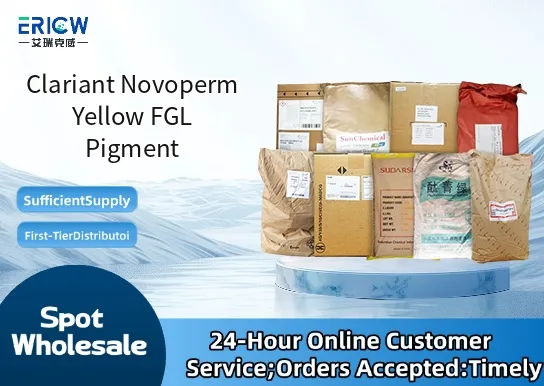
High chroma and excellent brightness for vibrant, clean yellow shades.
Outstanding thermal stability suitable for high-temperature processing up to 280 °C.
Good lightfastness and weather resistance in demanding outdoor applications.
Excellent dispersibility in both polar and non-polar polymer systems.
Compliant with major global regulatory frameworks including REACH and RoHS.
Automotive interior and exterior plastics (PP, ABS, PC/ABS blends).
Engineering thermoplastics for durable consumer goods and appliances.
General-purpose polyolefin masterbatches (e.g., PP, HDPE).
Coating systems requiring high color strength and gloss retention.
Food-contact-compliant packaging films (subject to local regulatory approval).
| Chemical Type | Disazo pigment (Pigment Yellow 191) |
| Product Form | Free-flowing powder |
| Appearance | Yellow to orange-yellow powder |
| Primary Applications | Plastics, coatings, inks |
| Key Features | High tinctorial strength, good heat stability, low dusting |
| Benefits | Consistent color reproduction, efficient dispersion, minimal filter clogging |
| Storage Conditions | Store in cool, dry place; avoid direct sunlight and moisture |
| Regulatory Status | REACH registered; compliant with EU Directive 2002/72/EC for food-contact plastics (subject to migration limits) |
Q1: What is the primary chemical class of Novoperm Yellow FGL?
A: Novoperm Yellow FGL is a high-performance perylene-based organic pigment, known for its excellent lightfastness, thermal stability, and resistance to migration in demanding polymer applications.
Q2: Is Novoperm Yellow FGL suitable for food-contact plastics?
A: While not inherently restricted for food-contact use, regulatory compliance depends on the final formulation, processing conditions, and applicable regional requirements. Users must conduct full regulatory assessment—including extraction testing and migration evaluation—per their target market’s framework before use in food-contact applications.
Q3: Which polymers show optimal dispersion and color development with this pigment?
A: Novoperm Yellow FGL demonstrates excellent compatibility and dispersion in polyolefins (e.g., PP, HDPE), engineering thermoplastics (e.g., ABS, PS), and certain PVC formulations. Performance in polar or highly crystalline matrices may require optimized dispersants or pre-treatment.
Q4: How does Novoperm Yellow FGL compare to standard monoazo yellow pigments in terms of heat stability?
A: Novoperm Yellow FGL offers significantly higher thermal stability than conventional monoazo yellows, enabling safe use in high-temperature polymer processing (e.g., injection molding of PP above 240 °C) without substantial hue shift or decomposition.
Q5: What is the typical dosage range for achieving strong chroma in polypropylene?
A: Dosage depends on desired opacity, shade strength, and processing method, but it is generally used at low concentrations—typically ranging from 0.1% to 2% by weight in polypropylene—to achieve high chroma and good dispersion.
Contact With Us:
E-mail: wangxingqiang@ericwchem.com
Have a Questions? Call Us:
Add:
Building A1, Jiete Industrial Park, Huangpu District, Guangzhou City, Guangdong Province, China