English
 Español
 tiếng việt
 русский
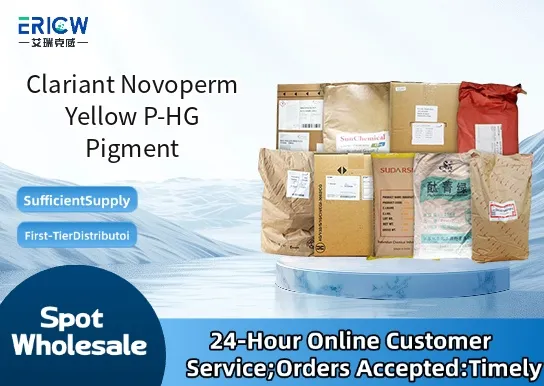
High chroma and excellent lightfastness for vibrant, durable yellow coloration.
Outstanding thermal stability suitable for high-temperature processing up to 280 °C.
Good dispersibility in both polar and non-polar polymer systems.
Low migration tendency, ensuring color consistency in demanding applications.
Compliant with major global regulatory frameworks including EU REACH and US FDA 21 CFR for relevant use cases.
Polyolefin masterbatches (PP, PE) for packaging and automotive components.
Engineering plastics including ABS, PS, and PC for consumer electronics housings.
Flexible and rigid PVC compounds for building & construction profiles.
Thermoplastic elastomers (TPE) used in medical device housings and seals.
Industrial coatings requiring weather-resistant yellow pigmentation.
| Chemical Type | Azo pigment (disazo) |
| Product Form | Free-flowing powder |
| Appearance | Yellow to orange-yellow powder |
| Primary Applications | Polymer coloring (thermoplastics, PVC, TPE), industrial coatings |
| Key Features | High heat stability, low migration, excellent dispersion |
| Benefits | Bright shade retention, processing robustness, regulatory compliance |
| Recommended Processing Temperature Range | Up to 280 °C (short-term) |
| Lightfastness (ISO 105-B02) | 7–8 (on blue wool scale) |
Q1: What is the primary application field for Novoperm Yellow P-HG?
A: Novoperm Yellow P-HG is a high-performance organic pigment specifically developed for demanding industrial coating and plastic applications, including automotive basecoats, high-gloss decorative plastics, and engineering thermoplastics requiring excellent lightfastness and thermal stability.
Q2: Is Novoperm Yellow P-HG suitable for food-contact plastics?
A: While Novoperm Yellow P-HG is not pre-approved for direct food-contact applications under major global regulatory frameworks, it may be considered for indirect contact uses—such as outer packaging layers—subject to full formulation evaluation and compliance verification by the end-user according to applicable local regulations.
Q3: How does this pigment perform in high-temperature processing conditions?
A: Novoperm Yellow P-HG exhibits good thermal stability, enabling safe use in standard injection molding and extrusion processes for engineering polymers such as polypropylene, ABS, and polycarbonate blends without significant hue shift or decomposition.
Q4: What dispersion methods are recommended for optimal color development?
A: For best results, dispersion should be carried out using high-shear equipment—such as three-roll mills or high-speed dispersers—with compatible carrier resins or surfactants. Pre-dispersed paste or masterbatch forms are also widely used to ensure uniform distribution and minimize agglomeration.
Q5: Can Novoperm Yellow P-HG be used alongside other high-performance pigments in multi-pigment systems?
A: Yes—it demonstrates good compatibility with many common high-performance organic and inorganic pigments in co-pigmented systems, supporting broad color gamut expansion and chroma enhancement when formulated with appropriate stabilizers and dispersants.
Contact With Us:
E-mail: wangxingqiang@ericwchem.com
Have a Questions? Call Us:
Add:
Building A1, Jiete Industrial Park, Huangpu District, Guangzhou City, Guangdong Province, China