English
 Español
 tiếng việt
 русский
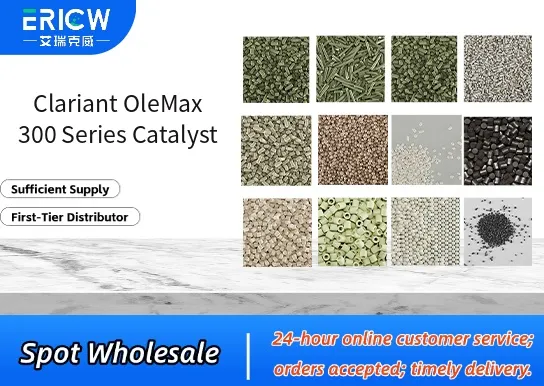
Highly selective for propylene production via propane dehydrogenation (PDH).
Enhanced thermal and structural stability under cyclic high-temperature regeneration conditions.
Optimized metal dispersion and tailored support acidity to minimize cracking and coking.
Consistent activity retention over extended run lengths (>1,000 hours per cycle).
Designed for compatibility with leading commercial PDH process technologies (e.g., CATOFIN®, Oleflex™).
Propane dehydrogenation (PDH) units for on-purpose propylene manufacturing.
Integrated petrochemical complexes requiring high-purity propylene feedstock.
Flexible cracker feed optimization where supplemental propylene supply is needed.
New-build and revamp projects targeting improved catalyst cycle life and yield efficiency.
| Chemical Type | Platinum–tin–alumina-based heterogeneous catalyst |
| Product Form | Extrudates (cylindrical pellets, ~1.6–2.0 mm diameter) |
| Appearance | Gray to dark gray free-flowing solid |
| Primary Applications | Propane dehydrogenation (PDH) to propylene |
| Key Features | High selectivity, low methane/ethane byproduct formation |
| Benefits | Reduced regeneration frequency, lower operating cost per ton of propylene |
| Storage Requirement | Store in dry, inert atmosphere; avoid moisture and reducing environments |
Q1: What is the primary function of the OleMax 300 Series in olefin polymerization processes?
A: The OleMax 300 Series is a high-activity Ziegler–Natta catalyst system designed to enable efficient propylene and ethylene–propylene copolymerization, offering excellent stereoselectivity and particle morphology control for robust slurry or gas-phase reactor operation.
Q2: How does OleMax 300 differ from earlier-generation Clariant polyolefin catalysts?
A: Compared to prior generations, OleMax 300 features an optimized internal donor package and tailored support structure, resulting in improved hydrogen response, broader comonomer incorporation capability, and enhanced catalyst productivity—particularly beneficial for high-melt-strength and impact-resistant polypropylene grades.
Q3: Is OleMax 300 compatible with common external donors used in industrial polypropylene production?
A: Yes, OleMax 300 is engineered for compatibility with widely used external donors such as alkoxysilanes (e.g., cyclohexylmethyldimethoxysilane or dicyclopentyldimethoxysilane), allowing flexible process tuning for isotacticity, molecular weight distribution, and reactor fouling mitigation.
Q4: What handling precautions are recommended for OleMax 300 catalysts?
A: As with all Ziegler–Natta catalysts, OleMax 300 must be handled under strict inert-atmosphere conditions (e.g., nitrogen or argon) to prevent deactivation by moisture, oxygen, or polar contaminants; storage should occur at controlled ambient temperatures in sealed containers, and personnel should follow standard organometallic safety protocols.
Q5: Can OleMax 300 be used in metallocene-catalyzed or post-metallocene systems?
A: No—OleMax 300 is a heterogeneous Ziegler–Natta catalyst system and is not formulated for use with single-site (metallocene or post-metallocene) catalyst technologies; it is intended for conventional multi-site coordination polymerization processes where high activity, bulk density, and morphological stability are critical.
Contact With Us:
E-mail: wangxingqiang@ericwchem.com
Have a Questions? Call Us:
Add:
Building A1, Jiete Industrial Park, Huangpu District, Guangzhou City, Guangdong Province, China