English
 Español
 tiếng việt
 русский
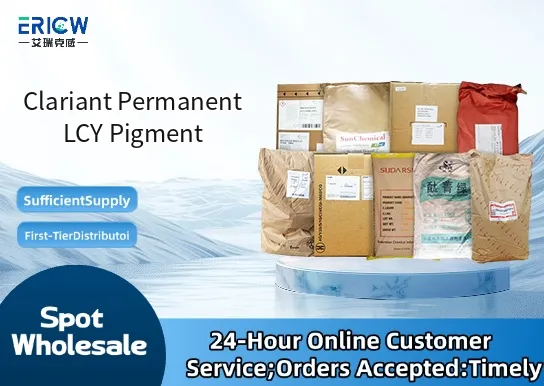
Exceptional lightfastness and weather resistance for long-term color stability.
High thermal stability suitable for demanding processing conditions up to 280 °C.
Excellent dispersibility in both polar and non-polar polymer matrices.
Low migration tendency, ensuring color integrity in multi-layer and food-contact applications.
Compliant with major global regulatory frameworks including EU REACH and US FDA 21 CFR §178.3297.
Engineering plastics for automotive interior and exterior components.
Food-grade polyolefin packaging films and containers.
High-performance masterbatches for injection molding and extrusion.
Electrical insulation materials requiring UV-resistant pigmentation.
Outdoor construction profiles and cladding systems exposed to harsh environmental conditions.
| Chemical Type | Condensed azo pigment (C.I. Pigment Yellow 138) |
| Product Form | Free-flowing powder |
| Appearance | Yellow to greenish-yellow fine powder |
| Primary Applications | Polyolefins, ABS, PS, engineering thermoplastics |
| Key Features | High chroma, excellent heat stability, low volatility |
| Benefits | Consistent batch-to-batch color match, minimal filter pressure buildup |
| Recommended Processing Temperature Range | 200–280 °C |
| Regulatory Status | EU REACH registered; compliant with ISO 9001 and ISO 14001 manufacturing standards |
Q1: What are the primary application areas for Permanent LCY Pigment?
A: Permanent LCY Pigment is widely used in high-performance industrial coatings, automotive refinishes, and engineering plastics where excellent lightfastness, thermal stability, and color strength are required. It is also suitable for select ink systems demanding strong chroma and dispersion stability.
Q2: How does Permanent LCY compare to conventional yellow pigments in terms of heat resistance?
A: Permanent LCY exhibits significantly improved thermal stability compared to many standard arylide yellows, enabling its use in polymer processing applications such as injection molding and extrusion at elevated temperatures without substantial hue shift or degradation.
Q3: Is Permanent LCY Pigment suitable for food-contact plastics?
A: Permanent LCY Pigment is not pre-approved for direct food-contact applications under major global regulatory frameworks. Its suitability must be evaluated case-by-case by the formulator, considering final article conditions, migration potential, and applicable local regulations.
Q4: What dispersion methods are recommended for optimal performance?
A: For best results, high-shear dispersing equipment—such as bead mills or three-roll mills—is recommended. Pre-wetting with compatible carriers and controlled temperature management during dispersion help achieve fine particle distribution and maximize color development.
Q5: What is the typical dosage range in polymer and coating systems?
A: Dosage depends on formulation requirements and desired opacity or transparency, but it is typically used at low concentrations—generally ranging from 0.1% to 2% by weight—due to its high tinting strength and efficient color yield.
Contact With Us:
E-mail: wangxingqiang@ericwchem.com
Have a Questions? Call Us:
Add:
Building A1, Jiete Industrial Park, Huangpu District, Guangzhou City, Guangdong Province, China