English
 Español
 tiếng việt
 русский
High thermal stability suitable for demanding processing conditions up to 280 °C.
Excellent lightfastness and weather resistance (ISO 105-B02, Grade 7–8).
Outstanding migration resistance in PVC, polyolefins, and styrenics.
Good dispersibility in both solvent-based and water-based systems.
Non-hazardous formulation compliant with major global regulatory frameworks including REACH and RoHS.
Coloration of rigid and flexible PVC profiles, cables, and flooring.
Masterbatch applications in polypropylene (PP) and polyethylene (PE) packaging films.
Automotive interior plastics requiring high lightfastness and low VOC emission.
Engineering thermoplastics including ABS and PS for durable consumer goods.
Industrial coatings and coil coatings where long-term color retention is critical.
| Chemical Type | Azo pigment (disazo) |
| Product Form | Free-flowing powder |
| Appearance | Orange-red free-flowing powder |
| Primary Applications | PVC, polyolefins, engineering plastics, coatings |
| Key Features | Thermal stability, lightfastness, migration resistance |
| Benefits | Consistent batch-to-batch color performance, low dust generation |
| Regulatory Compliance | REACH registered, RoHS compliant, non-heavy-metal |
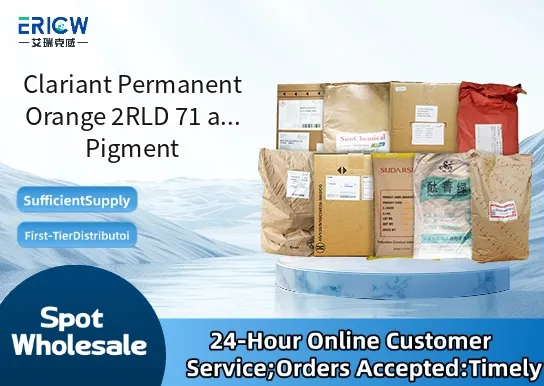
Q1: What are the primary application areas for Permanent Orange 2RLD 71 a... pigment?
A: This high-performance organic pigment is widely used in demanding industrial coatings, automotive refinish systems, and engineering plastics where excellent lightfastness, thermal stability, and color strength are required. It is also suitable for selected printing ink formulations, particularly in packaging applications requiring good weather resistance.
Q2: Is this pigment suitable for food-contact plastics or inks?
A: Permanent Orange 2RLD 71 a... is not certified for direct food-contact applications. Its use in food packaging must be evaluated case-by-case based on regulatory status in the target market, migration behavior of the final formulation, and compliance with applicable local food contact material regulations.
Q3: How does this pigment perform under elevated processing temperatures?
A: The pigment exhibits good thermal stability and is suitable for standard melt-processing conditions encountered in polyolefins and engineering thermoplastics. For extended residence times or high-temperature polymers like polyesters or polycarbonates, performance should be verified through application-specific testing.
Q4: What dispersion methods are recommended for optimal color development?
A: Optimal dispersion is achieved using high-shear equipment such as three-roll mills, bead mills, or high-speed dispersers. Pre-wetting with compatible solvents or resins is recommended to minimize agglomeration. Performance depends significantly on the vehicle system, so dispersion protocols should be tailored to the specific binder and rheology profile.
Q5: What is the typical dosage range in polymer and coating systems?
A: Dosage varies depending on the desired opacity, color strength, and substrate. In most polymer applications, it is typically used at low concentrations—generally ranging from 0.1% to 2% by weight. In coatings, effective loading usually falls between 0.5% and 3% by weight of the total formulation, subject to compatibility and performance requirements.
Contact With Us:
E-mail: wangxingqiang@ericwchem.com
Have a Questions? Call Us:
Add:
Building A1, Jiete Industrial Park, Huangpu District, Guangzhou City, Guangdong Province, China